
The Ultimate 48-hour Tuscany Itinerary
Tuscany is one of those places where you could easily spend a month and still feel like you’ve only scratched the surface. But let’s be realistic, sometimes we only have a weekend to work with. If you find yourself with just 48 hours to soak in the cypress-lined roads and hilltop towns, don’t worry. It’s entirely possible to see the highlights without feeling like you’ve spent the whole time in the car.
Our Base: We stayed in the quiet village of Castiglion Fibocchi [check out my guide to that hidden gem here] as a base to explore some of the most iconic spots in the region.
If you have longer, take it. Tuscany is made for slow travel. But if you’re on a timeline, here is exactly how we spent a beautiful jam-packed two days.
A Quick Tip on Italian Parking:
If you’re driving in Italy for the first time, pay attention to the colours of the lines on the ground. White lines mean free parking, Blue means you have to pay (usually at a nearby machine), and Yellow is strictly for residents. Avoid the yellow ones or you’ll almost certainly find a ticket on your windscreen!
Day 1: The Ultimate Val d’Orcia Road Trip
Stop 1: Montepulciano
We started the day off with a drive to Montepulciano, located in the province of Siena. From our apartment in Castiglion Fibocchi, it was about an hour’s drive, which gave us plenty of time to enjoy the scenery.
The town is perched on a hill, so you’ll find car parks all around the outside of the town walls before you have to start walking uphill.
Once we parked, we did a full loop of this medieval town. The architecture is stunning, but it was the views of the surrounding vineyards that really stole the show. Because of the recent rain, the vines were a vibrant, fresh green.
The Best 360-Degree Views in Montepulciano
Because the town is perched so high, you’re essentially guaranteed views of the rolling Tuscan hills from almost every corner.
Palazzo Comunale Tower: This 14th-century tower is the place to go for a full 360-degree panorama. It’ll cost you €5.00 for the tower climb or €2.50 if you just want to access the terrace. There are a lot of steps, but the view of the countryside is worth it. You can check the current opening times on the website [here].
Caffè Poliziano: This is a beautiful café, where the decor inside is as stunning as the view outside. It’s like stepping back into a 19th-century, filled with intricate wood carvings, velvet armchairs, and mirrors that make the whole place glow. It’s easily the most beautiful spot in town to grab a cappuccino. The view from outside the window leading out onto the balcony acts as a picture frame out over the valley. You can book a table on their website [here] so you don’t have to waste time in a queue.
Since this is a 48-hour trip, time is your most valuable currency. If you arrive at the Palazzo Comunale or the Caffè Poliziano and the queues look quite long, don’t sweat it. Montepulciano is perched high, so, you don’t actually need to pay for a ticket to see the landscape. If the main spots are busy, you can still find picture perfect spots at the end of most alleyways.
As you walk through the narrow streets, you’ll notice a lot of shops offering free wine tasting. Montepulciano is most famously known for its red wine, specifically the Vino Nobile di Montepulciano. We walked to the Giardino Pubblico della Fortezza, it is a peaceful, hidden-gem park located at the highest point of Montepulciano, right next to the historic Fortezza Medicea.
Pro Tip for Wine Lovers
This garden is steps away from the Enoliteca del Consorzio which is located inside the Fortress. Grab a glass of Vino Nobile, or a refreshing local white and take it to go! Walk over to the park, and enjoy it while sitting on a bench taking in the views.
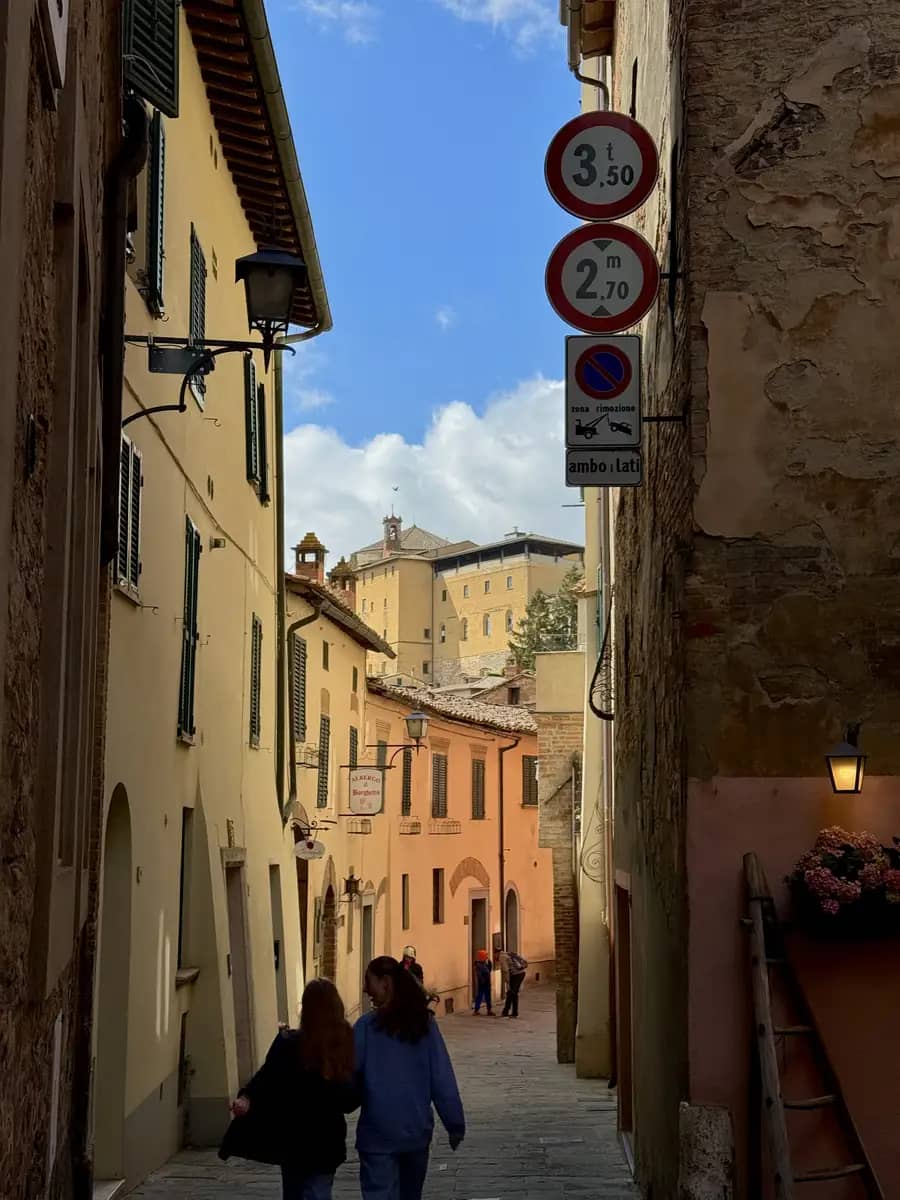
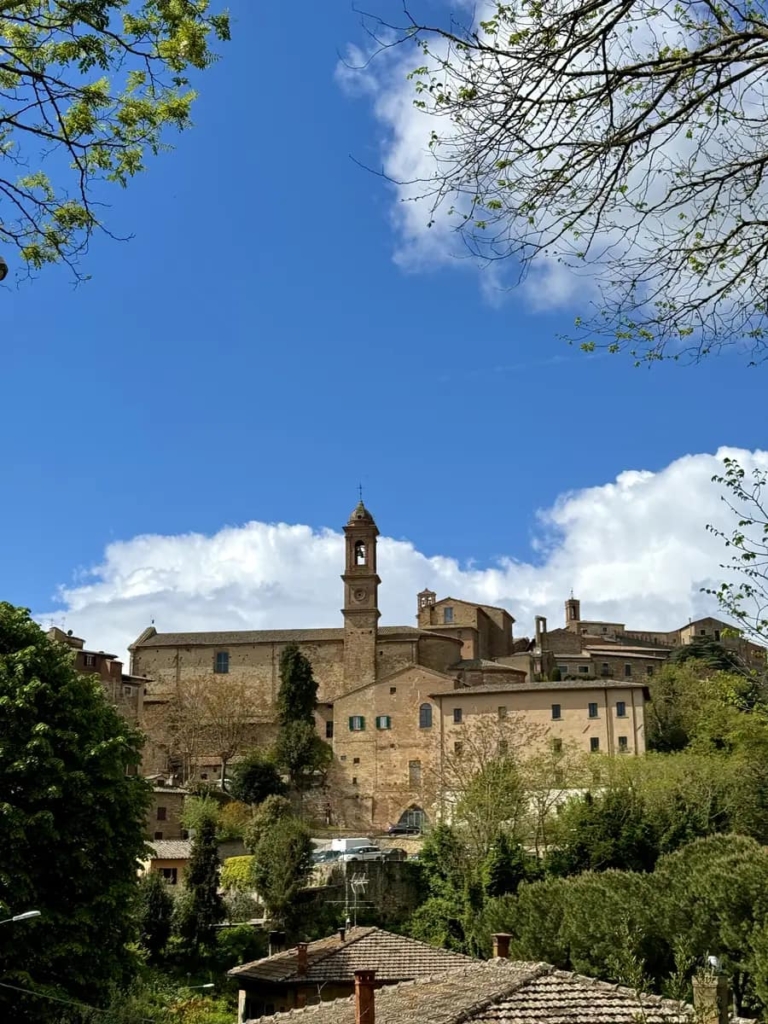
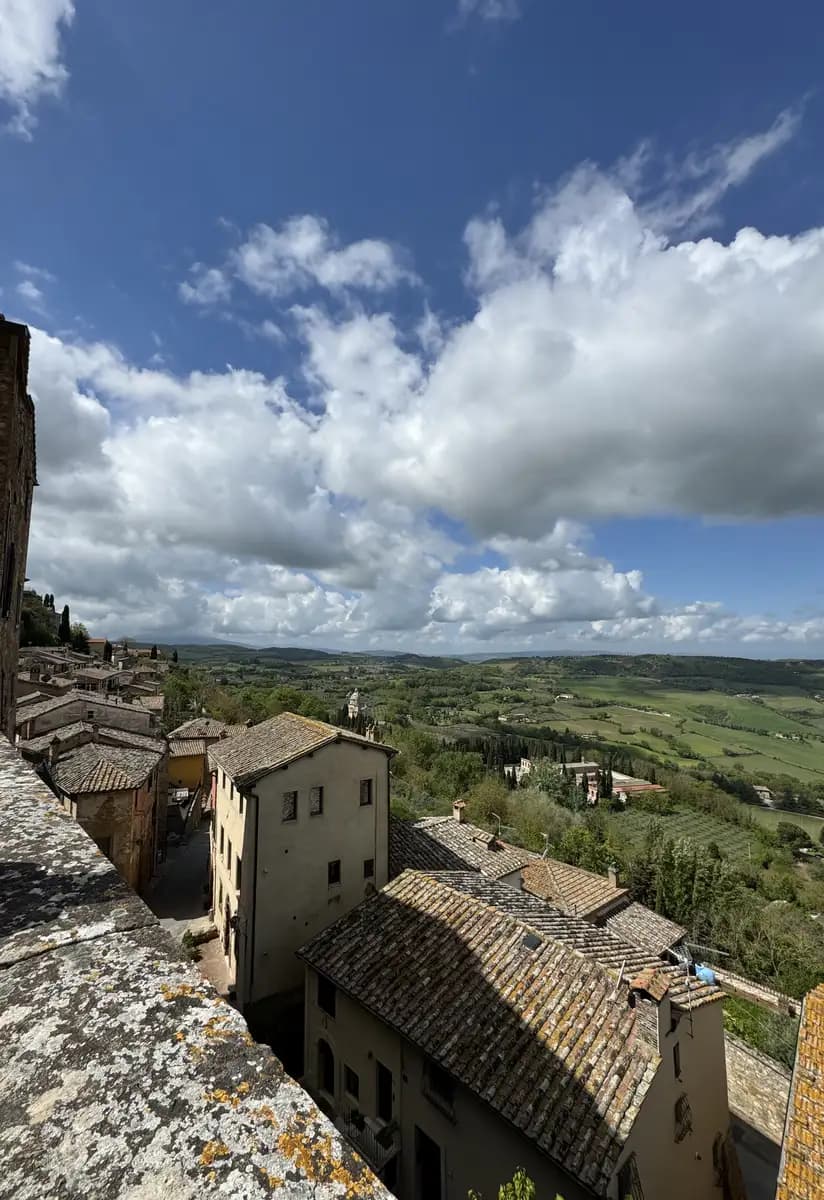
If you would like to see more pictures of Montepulciano, click on this link to watch my [TikTok].
Stop 2: Montalcino
After Montepulciano, we drove to Montalcino. It was quite difficult to find parking, eventually we did but it took about 20 minutes.
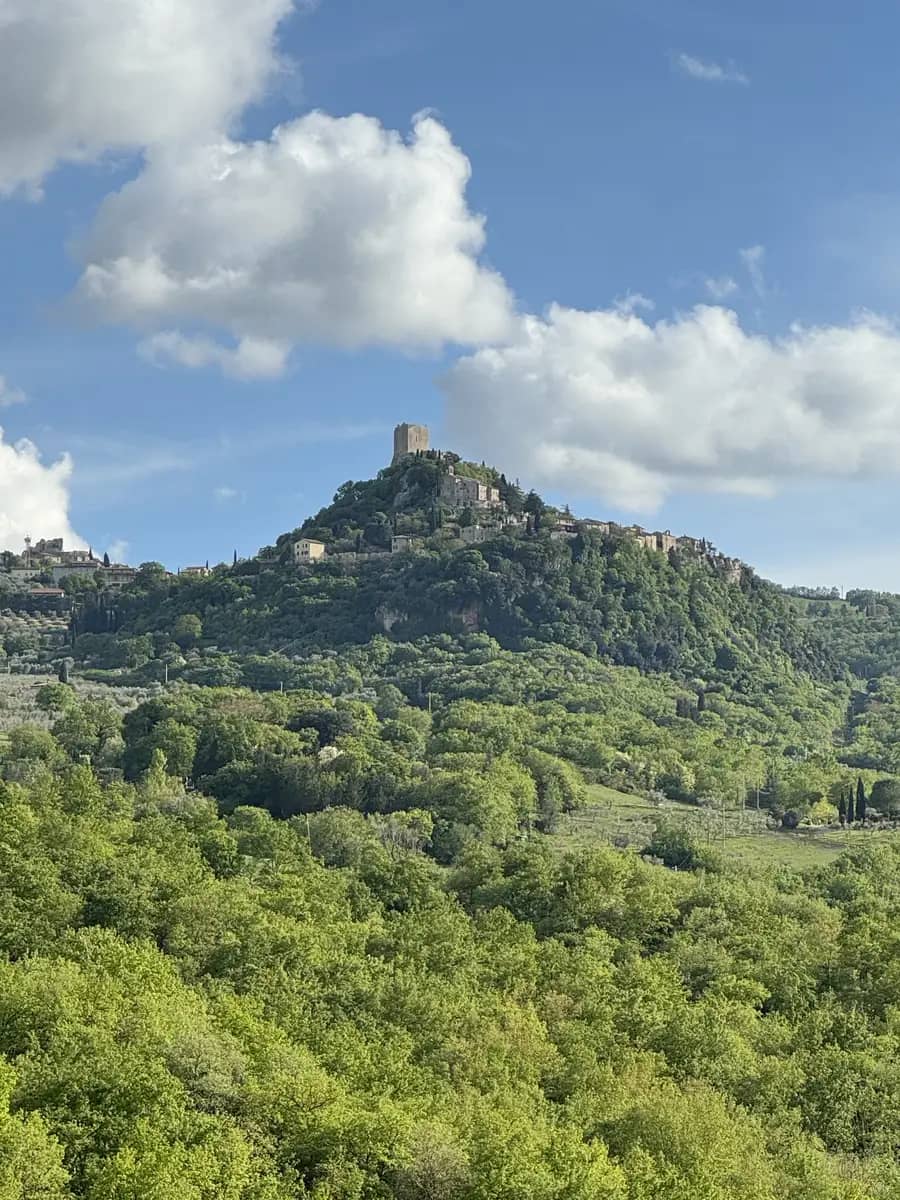
Montalcino is the home of one of the world’s most prestigious red wines, Brunello. Beyond the world-famous Brunello lies a quaint, medieval town. We roamed around the streets to the Palazzo dei Priori. We grabbed a quick lunch and admired the walls of the Fortress.
The If You Have Extra Time Section
While we were on a tight 48-hour programme and didn’t quite manage to squeeze these into our schedule, they are top of the list for my next visit. If you’ve got a bit more breathing room in your itinerary, these two are meant to be a highlight:
- The Fortezza di Montalcino: We saw the glow on the 14th-century fortress walls from the town, but didn’t have the time to properly climb them. If you can, head up there for what’s meant to be the best panoramic view of the valley.
- Abbey of Sant’Antimo: This Romanesque abbey is only about a 10-minute drive (10km) from the centre of Montalcino. It’s set right among the cypress trees and olive groves. We didn’t make the detour this time, but if you want a bit of peace and quiet away from the town, it looks like a stunning spot to stop.
Stop 3: Bagno Vignoni & Parco dei Mulini
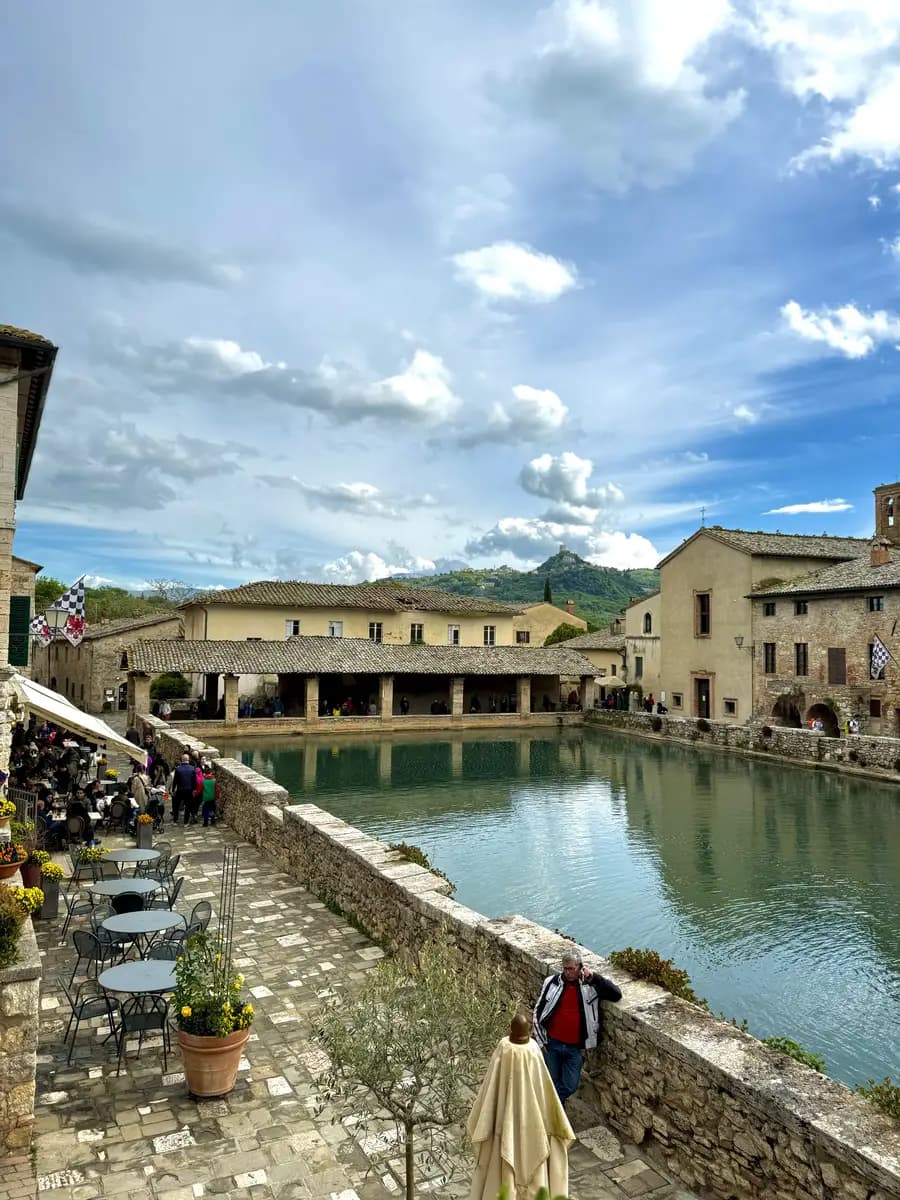
Our next stop was Bagno Vignoni in the heart of the Val d’Orcia (a UNESCO World Heritage site). Bagno Vignoni is a pedestrian-only zone. There is a large paid car park located just above the village entrance.
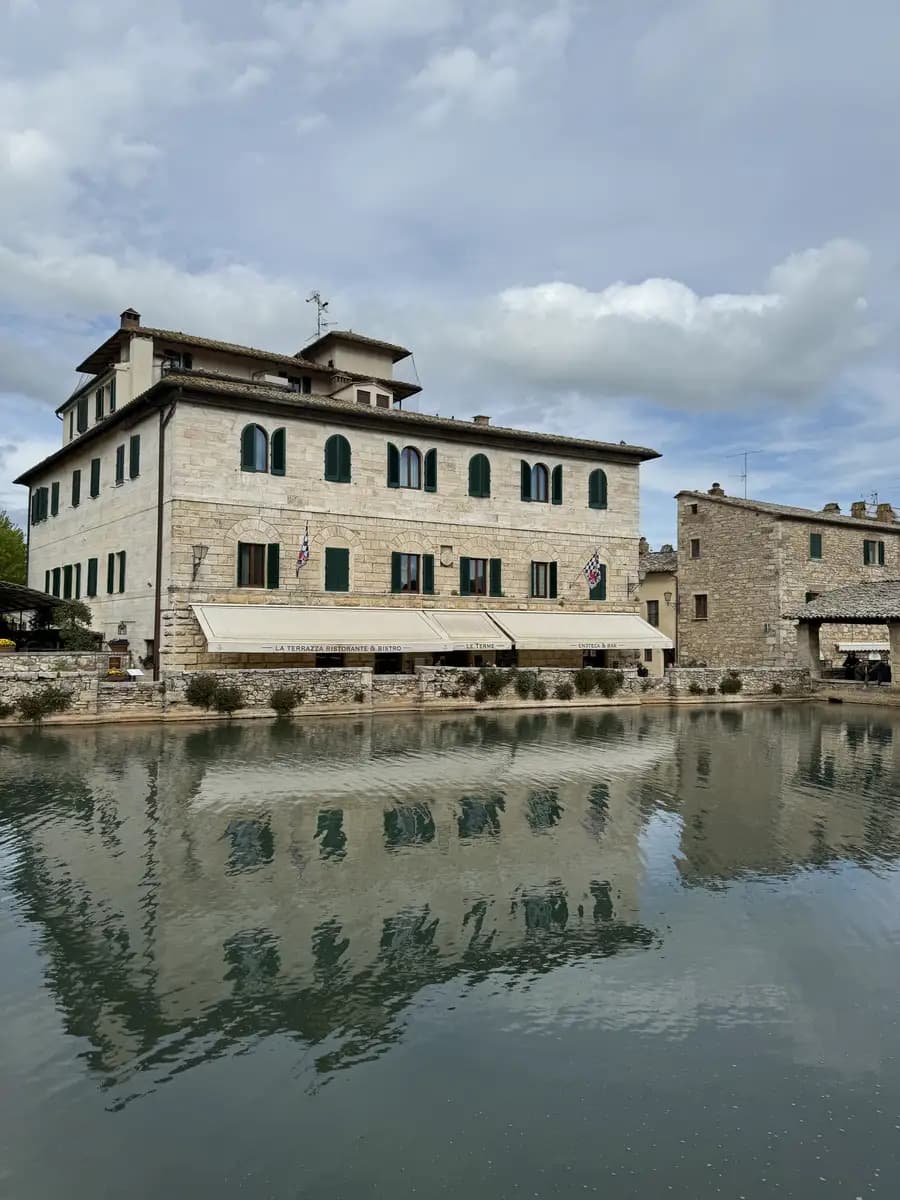
I have to say, it’s one of the most unique villages I’ve seen in Italy. Instead of the usual stone-paved piazza in the centre of town, you’ll find a massive, ancient thermal bath. The water reaches a temperature of 49°C. In the colder months, you can see steam rising from it. While it looks incredibly tempting, you aren’t allowed to go into the water.
After you’ve explored the village, take the short walk over to the Parco dei Mulini (Park of the Mills). Entrance to the park is free. It is a fascinating archaeological site where you can see how the thermal waters have flowed through the landscape for centuries.
Back in the day, the Sienese built four underground mills here. What made them clever was the thermal water. While other mills in Italy had to stop working during dry summers when the rivers ran low, the hot springs here provided a constant, year-round flow. The water leaves the main square at a piping hot temperature and cools down to a perfect 38°C by the time it reaches the park. A popular activity is to sit along the small canals (gorelli) leading to the cliff edge and soak your feet in the warm, running water.
If we had more time, we definitely would have stayed here longer. It’s such a peaceful, scenic spot, and there is so much history to be learned. It’s definitely a place where you could easily lose an hour just soaking in the atmosphere.
Stop 4: Pienza for Sunset & Aperitivo
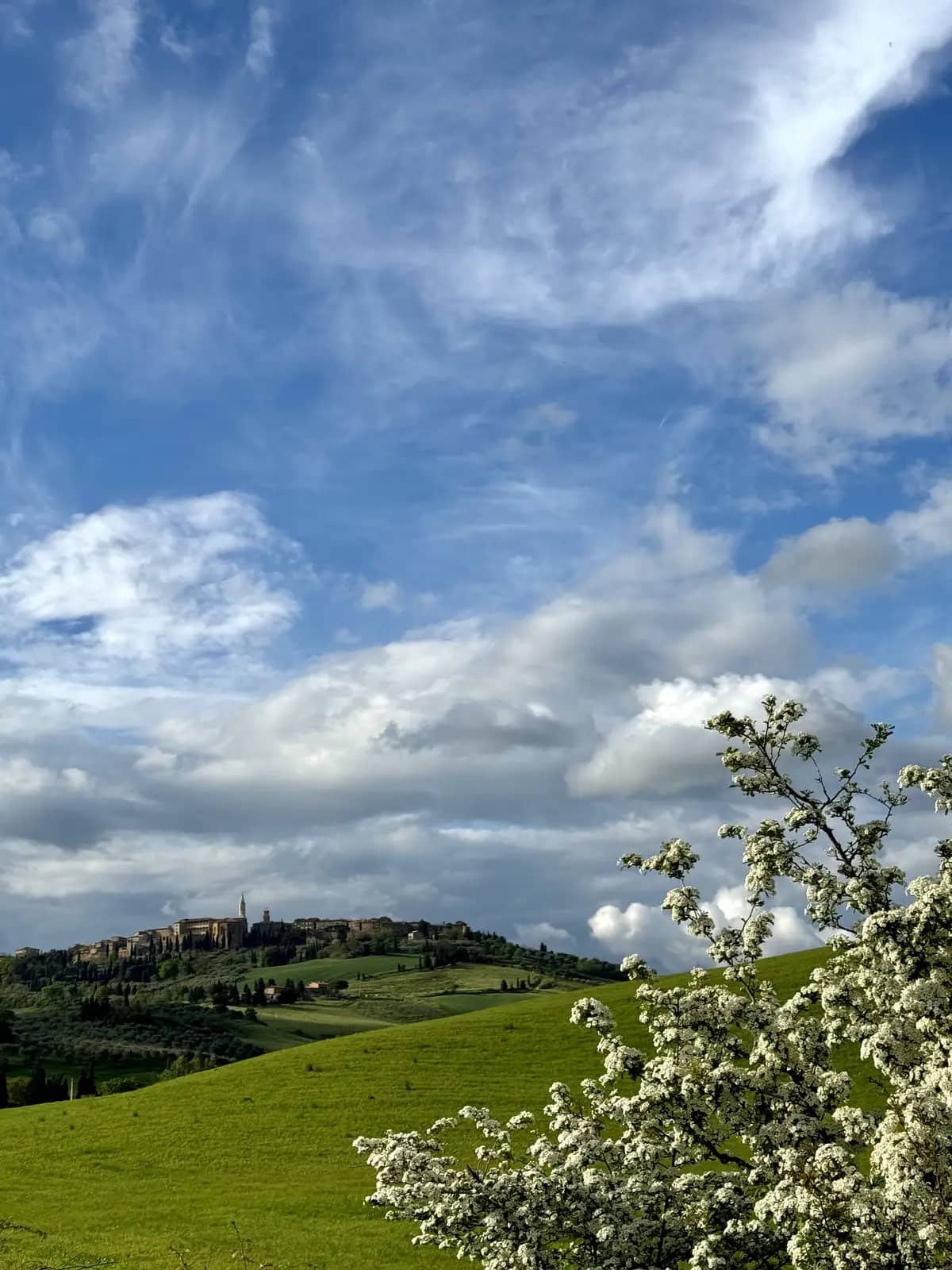
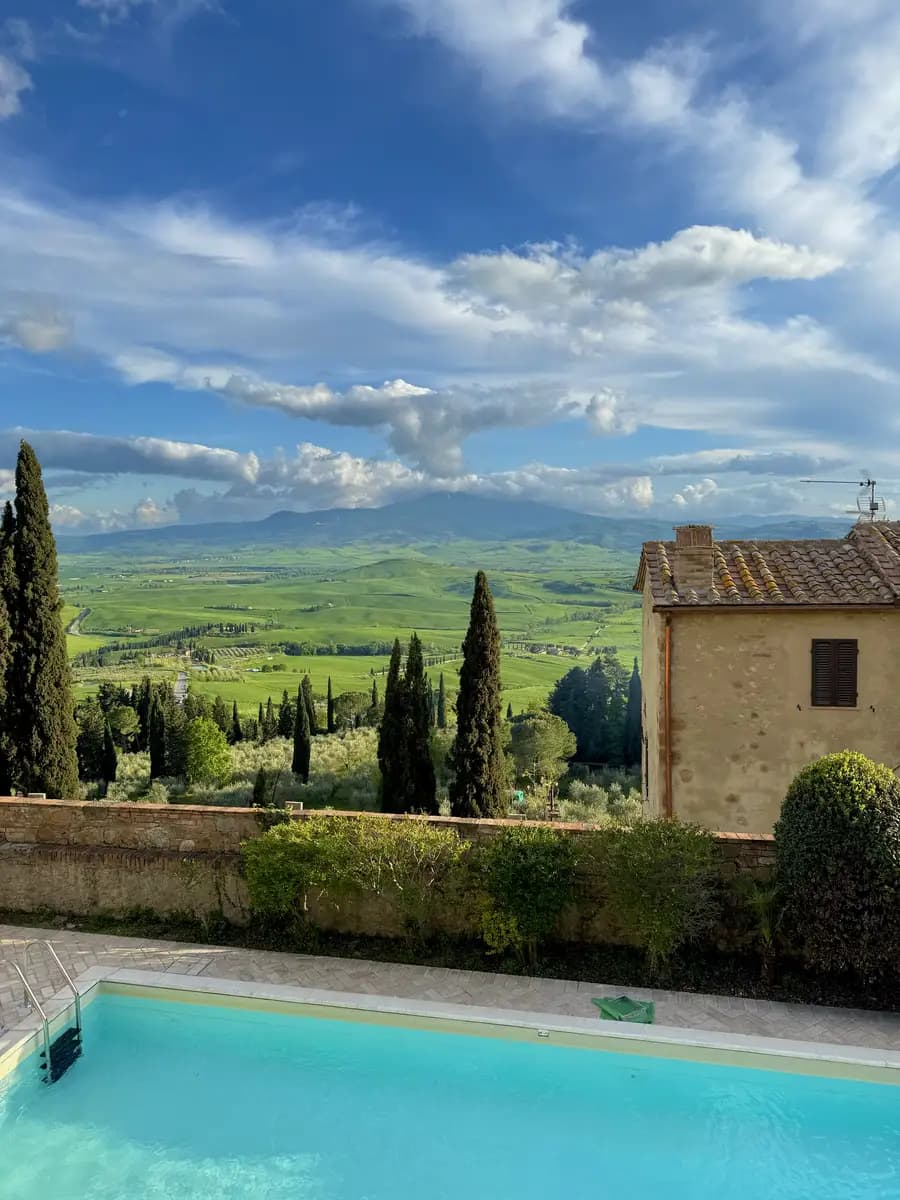
The drive from Bagno Vignoni to Pienza was the highlight of the day for me. As we were driving through the heart of the Val d’Orcia, we found ourselves in total awe of the landscape. It was, without a doubt, one of the most scenic car journeys I’ve ever had. We honestly felt like pulling over every five minutes just to take it all in; the rolling green hills are exactly what you imagine when you think of Tuscany, but seeing them in person is something else entirely.
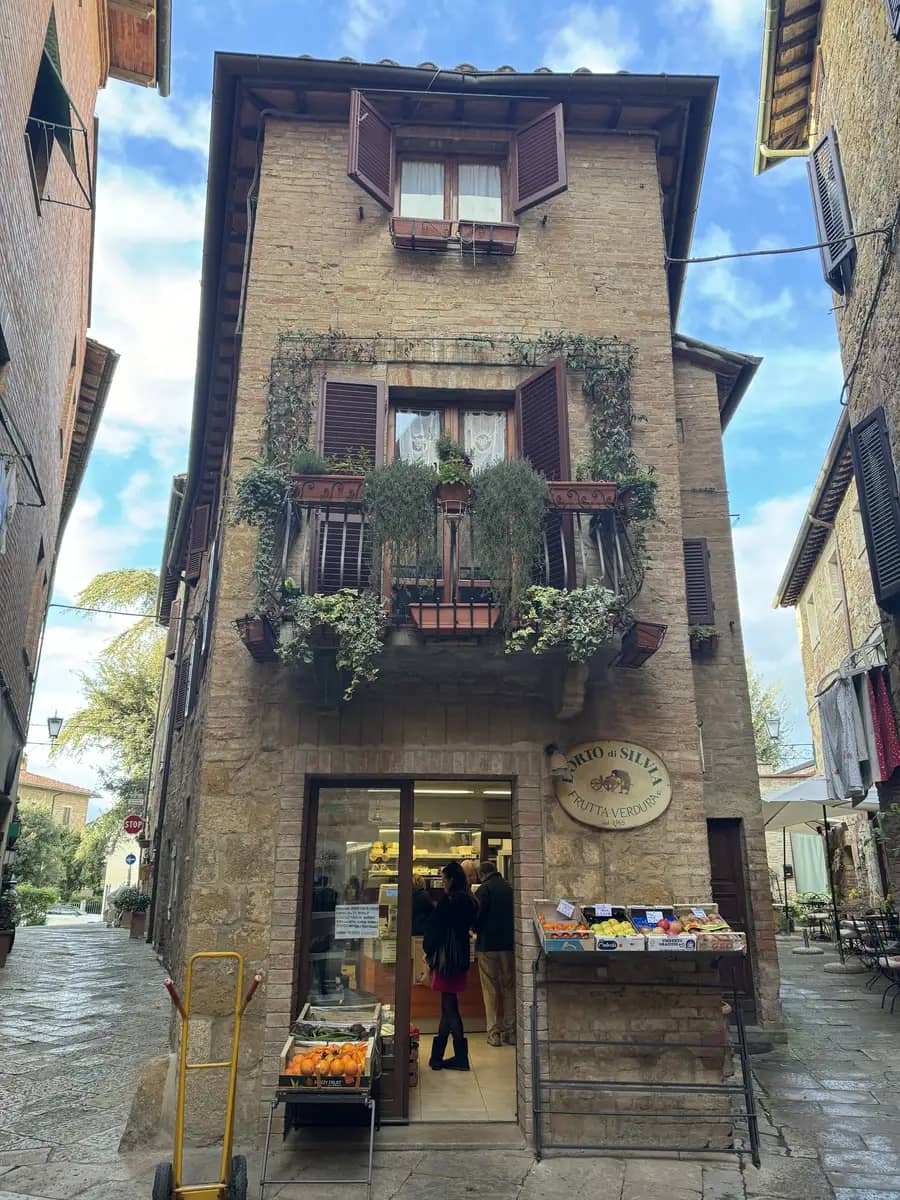
When we arrived at the hilltop town of Pienza, we spent our time exploring its narrow, flower-lined streets and looking out over the valley. In my opinion, Pienza was my favourite town so far on this trip. It has a certain charm and elegance that is hard to beat, especially when you’re looking out from the town walls at the late afternoon light hitting the countryside.
Pienza is famous for it’s Pecorino cheese, so make sure you stop for a tasting. You can practically smell the cheese from all over the town. After you’ve had your fill, take a slow walk towards Via dell’Amore (Street of Love) to Via del Bacio (Kiss Street) then down to Via del Casello, a panoramic walkway at the city walls that offers famous views of the Val d’Orcia.
After wandering around for a while, we decided to end the day the proper way. We found a lovely little spot called Piccolo Mini Bistrot and had an outdoor aperitivo in their quiet courtyard. Sitting there with a drink in hand, tucked away from the main walkway, was the perfect way to soak in the atmosphere before making the drive back to our apartment in Castiglion Fibocchi.
Day 2: Exploring San Gimignano and the Best Views in Siena
Stop 1: San Gimignano (The Medieval Manhattan of Tuscany)
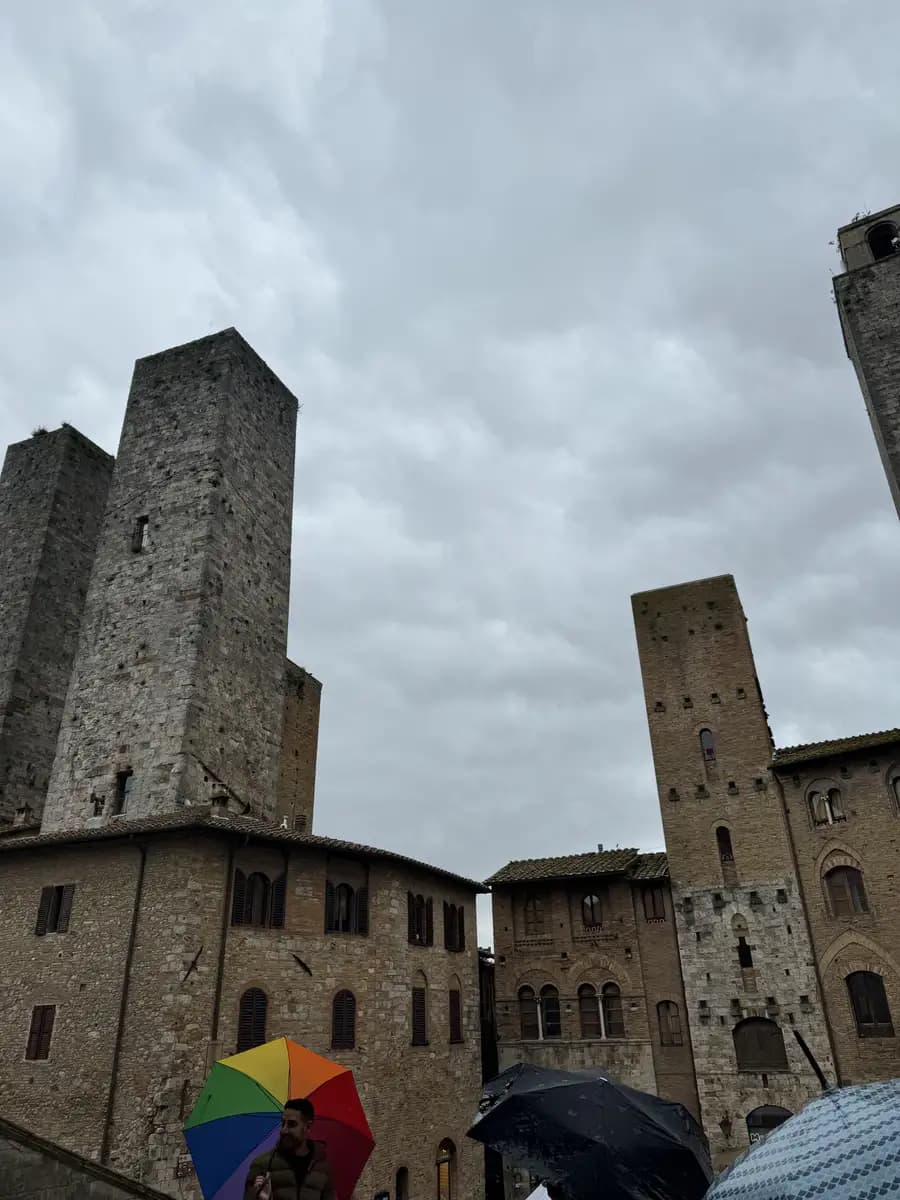
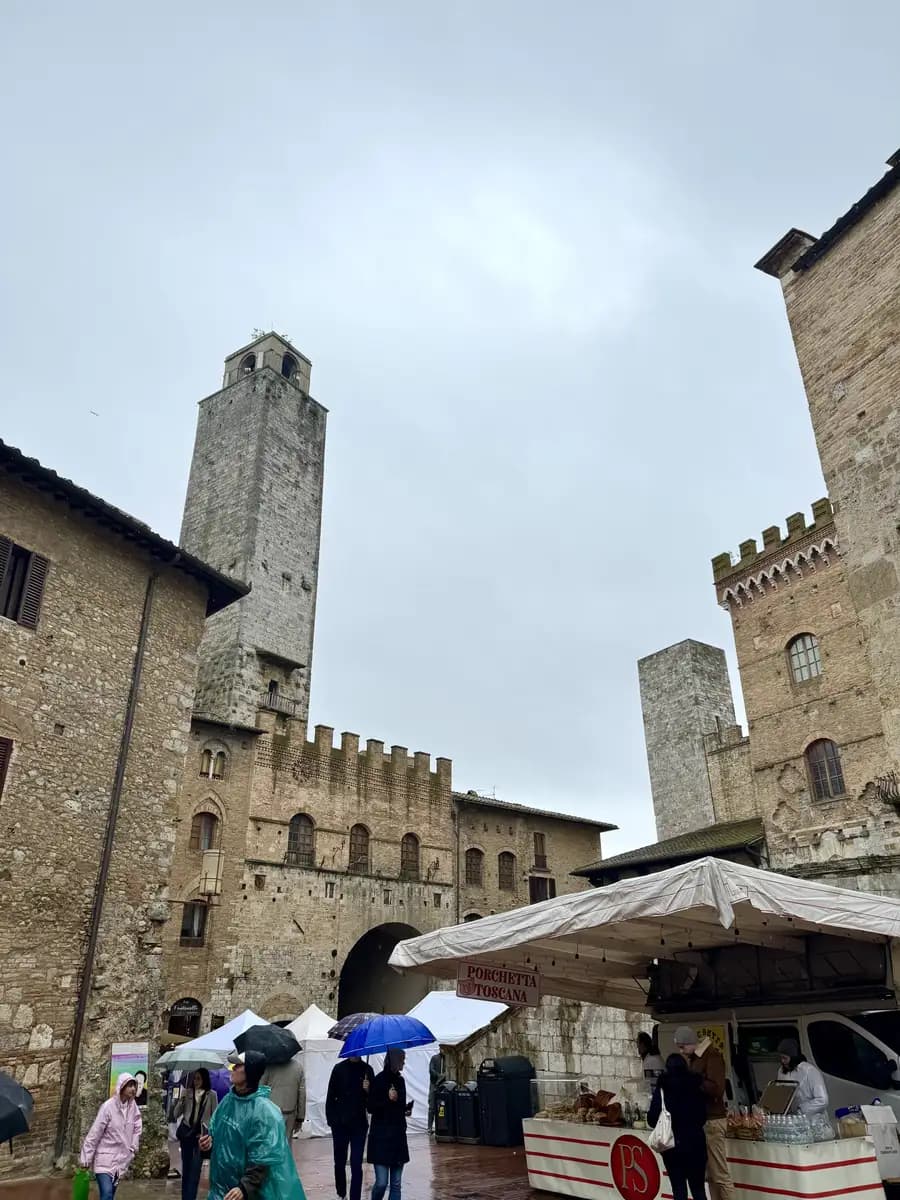
Our first stop was San Gimignano. It’s a small town with only about 7,500 inhabitants, but it packs a massive punch. It’s a UNESCO World Heritage site and is famously known for its towers. Back in the day, wealthy families would compete to see who could build the tallest tower. It was basically the medieval version of showing off. At its peak, there were 72 towers in this tiny town, now only 14 remain.
The weather wasn’t exactly on our side today; it was raining quite a bit, but honestly, that didn’t stop the beauty of Tuscany from shining through. If anything, the mist hanging over the towers made it feel even more like we had stepped back in time.
The narrow streets are incredibly well-kept, and because it’s a pedestrian-only zone inside the walls, you can really wander without worrying about cars. Even in the rain, the medieval stone architecture is amazing to see. It’s one of those places where you just want to put your phone away (after taking the mandatory tower photos, of course) and just imagine what life was like here hundreds of years ago.
Where to find the best gelato in San Gimignano
You’ll likely see the queue before you see the shop, but Gelateria Dondoli in the Piazza della Cisterna is world-famous for a reason. It has won the Gelato World Championship multiple times, and honestly, it’s a bit of a result. It’s the perfect treat to have in hand while you’re wandering between the medieval towers (even in the rain).
If you aren’t on a 48-hour restraint and have a bit of extra time to spare, you can actually go behind the scenes at Gelateria Dondoli. They offer a gelato making class where you can learn the secrets behind their award-winning flavours and make your own gelato! It’s a popular one, so you’ll need to book ahead. You can check the dates and book your spot on their official website here.
Local Vernaccia Wine and the Best Photo Spot in Town
Once you’ve finished your gelato, grab a glass of Vernaccia a local crisp white wine. With your glass in hand (or after a quick stop at a local enoteca), head up the hill to the Rocca di Montestaffoli. These are the ruins of a 14th-century fortress, and they hold the secret to the best picture spot in town. It’s the best spot to catch your breath and get that postcard shot.
Taking your wine to go means you can sip as you wander, making your way toward the best viewpoints without missing a beat, especially if you are on a 48-hour timeline.
Stop 2: Siena — The Heart of Tuscany
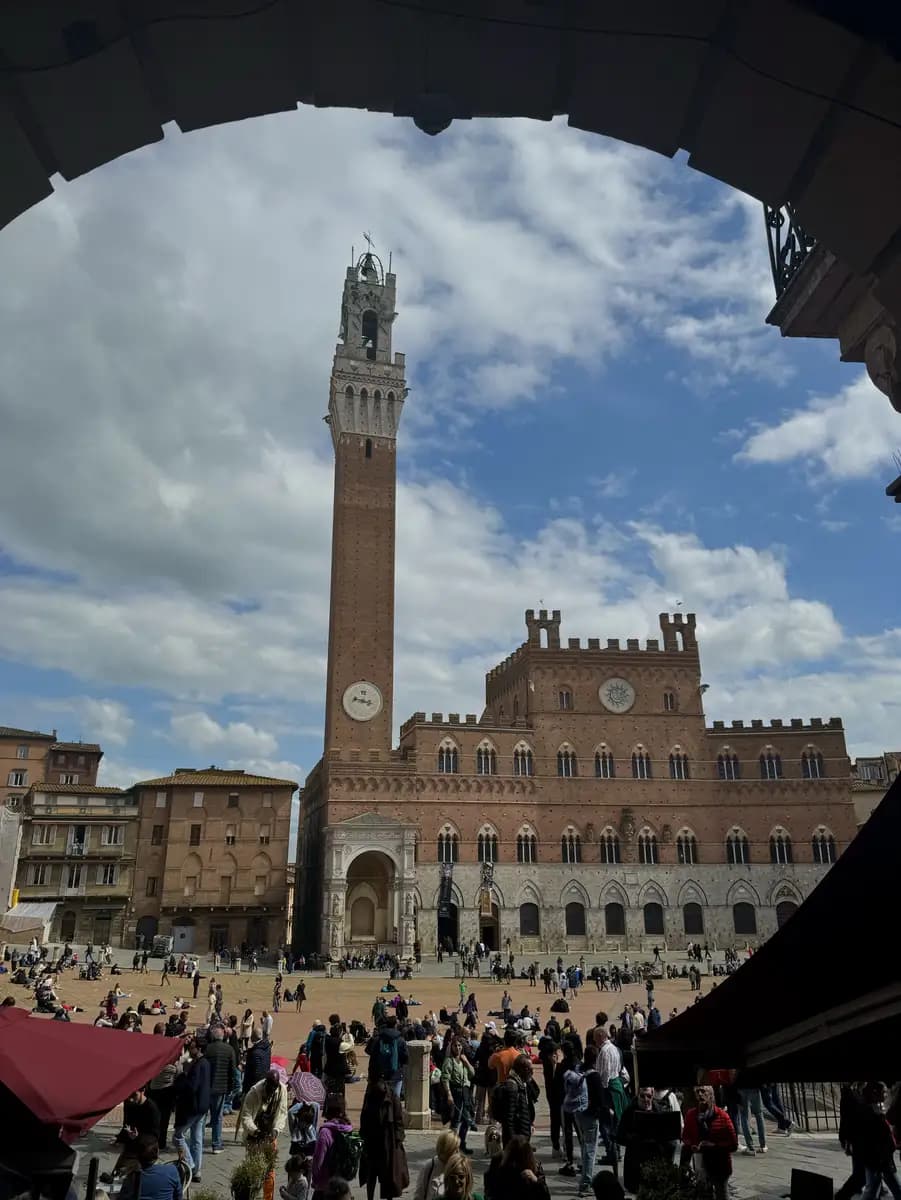
From San Gimignano, we drove about 45 minutes south deeper into the Tuscan countryside to Siena. I’d heard the hype for years, but nothing quite prepares you for the moment you walk down into the Piazza del Campo.
Standing in the centre of that shell-shaped piazza, spinning around to take in the red-brick facade and the Tower del Mangia, you quickly understand why it’s one of the most famous squares in all of Italy. It’s grand, it’s historic, and even on a rainy day, it’s breathtaking.
Lunch at Te Ke Voi
By the time we arrived, we were starving. We decided to try Te Ke Voi?, which had great reviews on Google. We had to wait a little bit for a table, but it was well worth it. We managed to get a seat outside in the alleyway where we could see down to the piazza and watch the world go by. We both went for their focaccia sandwiches, and they were exactly what we needed.
Siena Cathedral Guide: A Must-See Masterpiece in Tuscany
The Stunning Interiors of the Duomo di Siena
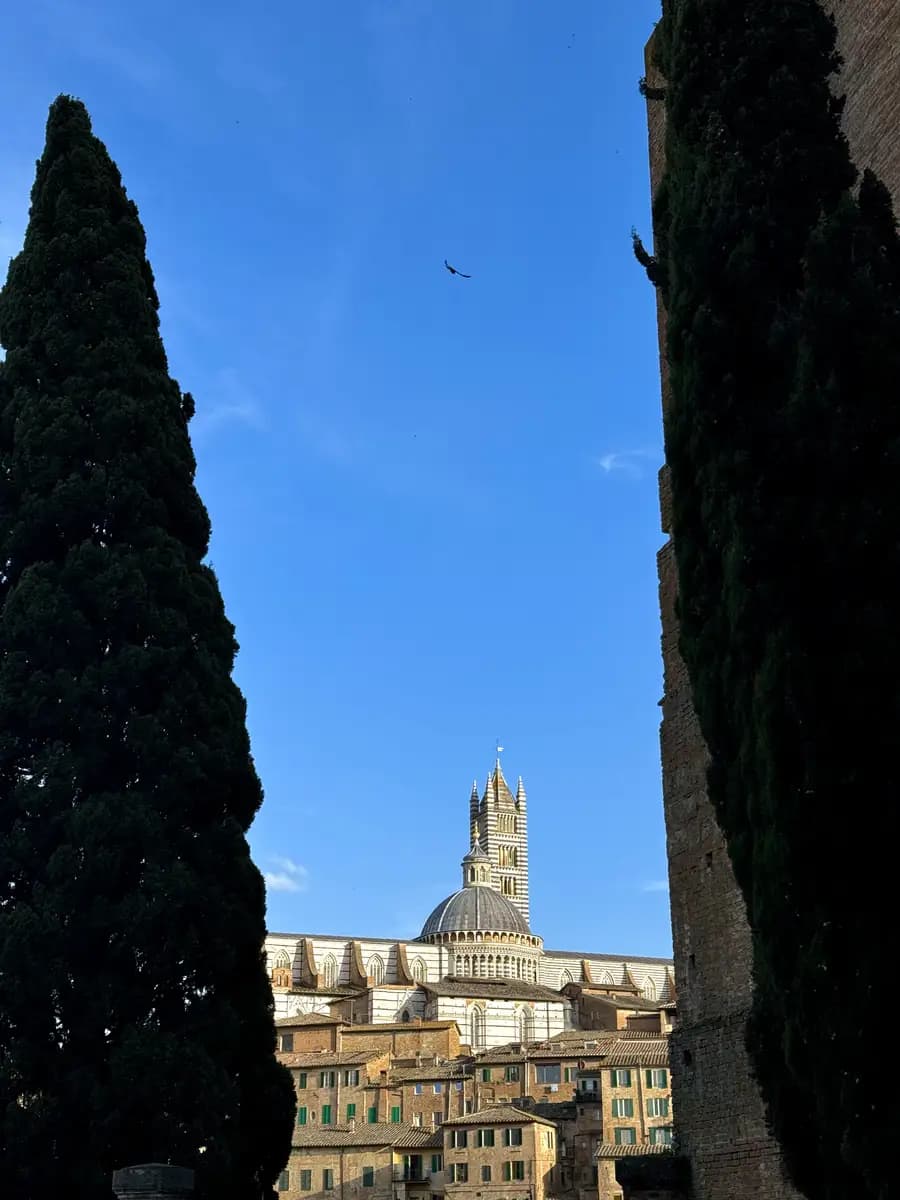
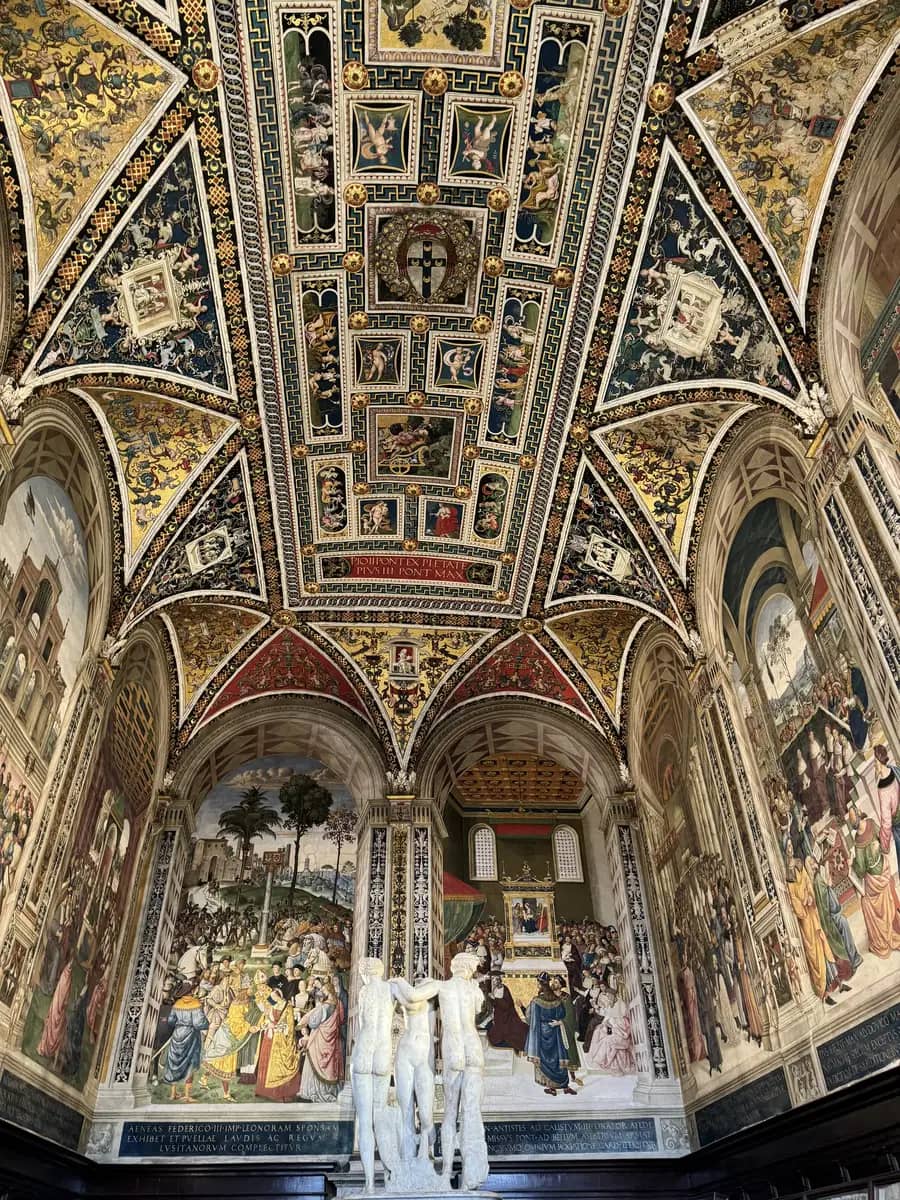
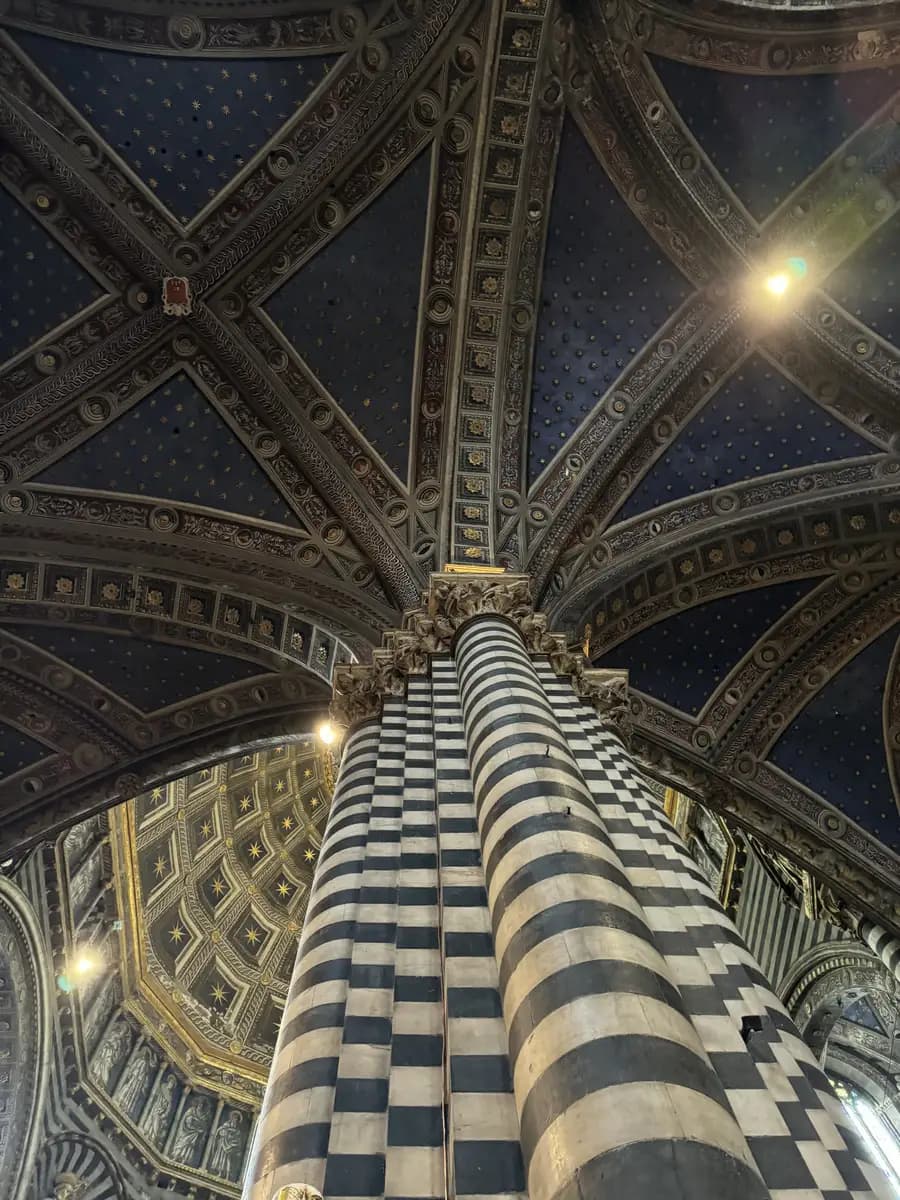
The Duomo di Siena (Cathedral of Santa Mary of the Assumption) is widely considered one of Italy’s most significant Romanesque-Gothic buildings. While the outside is striking, the inside is where it truly takes your breath away.
Look out for the set of 12 beautiful stained-glass windows that flood the space with colour. The cathedral is packed with masterpieces from every era, including some of the world’s most famous sculptures and paintings. It’s the kind of place where you could spend an hour just looking at one corner and still feel like you’ve missed something.
The Famous Marble Mosaic Floors
The cathedral’s most prized possession, and for good reason, is the marble mosaic inlay and graffito floor. It’s essentially a massive art gallery right under your feet. The level of detail in the stone is incredible; it’s unlike anything else you’ll see in Italy. Tickets range from €7 to €10, depending on the time of year you go.
- Pro Tip: Because the floor is so delicate, parts of it are often covered for protection. If you want to see the whole thing in its full glory, check the cathedral’s calendar, as they usually “uncover” the entire floor for a few weeks between August and October. You can check prices and opening times on their official website here.
The Iconic Fontebranda
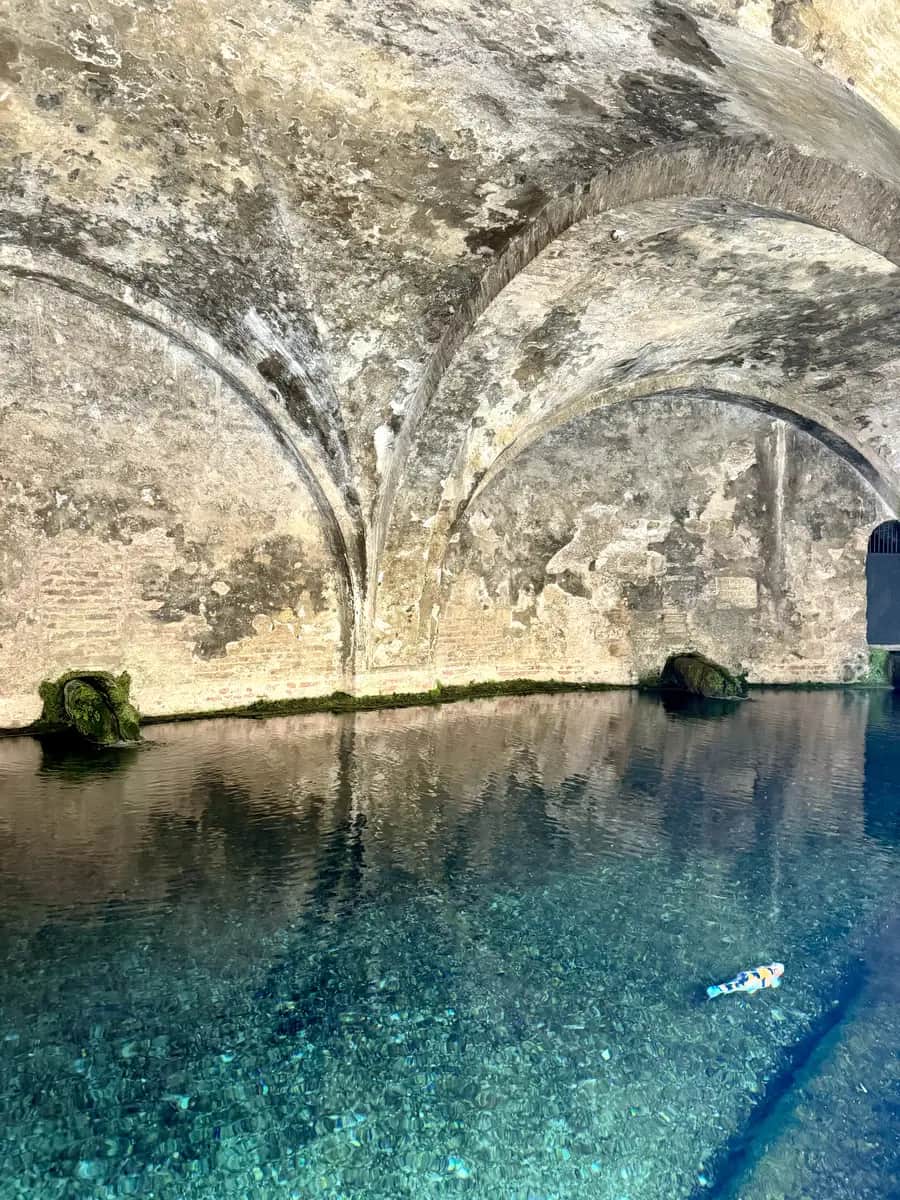
Before you start your final climb of the day, make sure to stop at Fontebranda. It’s the oldest and largest medieval fountain in Siena. It has three massive Gothic Arches and beautiful, clear turquoise blue water with colourful fish swimming in it.
The Climb to Basilica Cateriniana
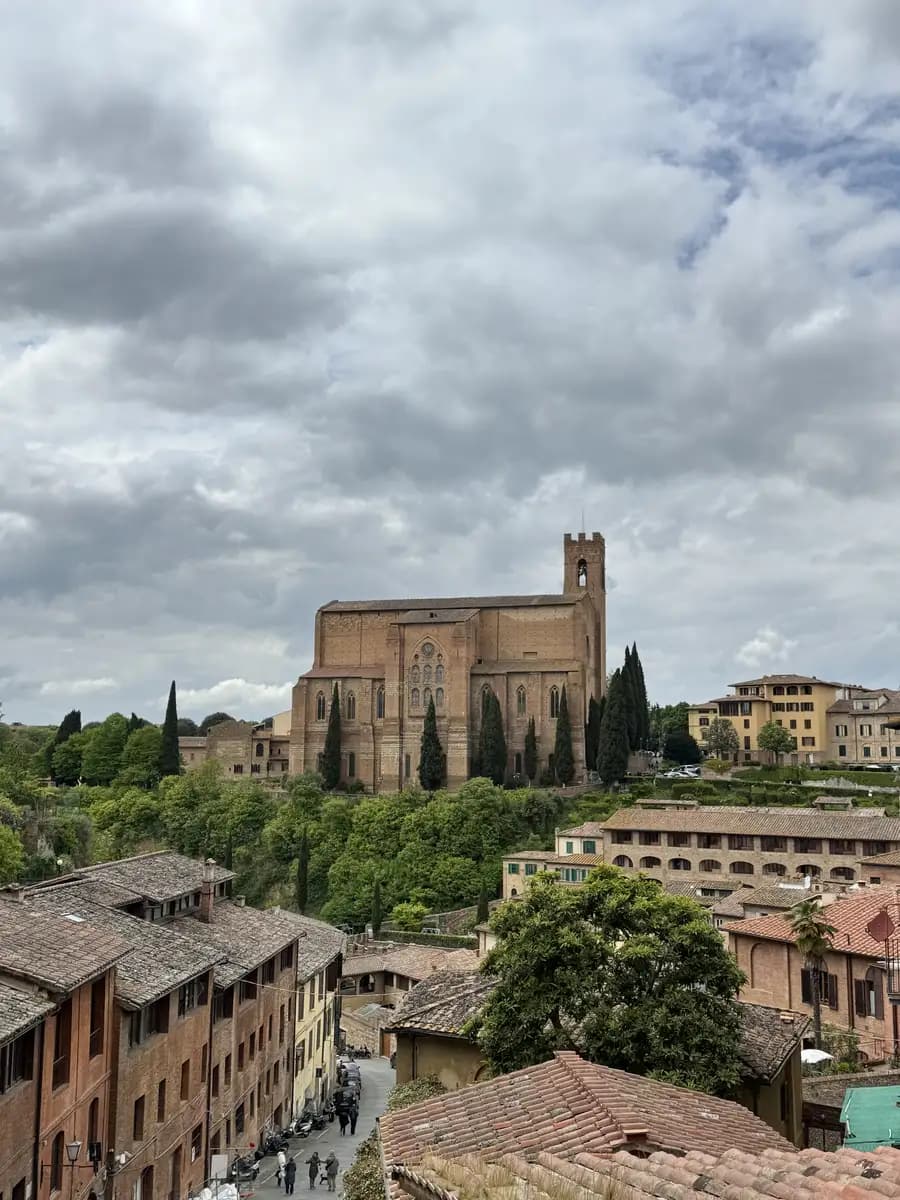
To the right of the fountain, you’ll find a set of stairs. I won’t lie to you… there are a lot of steps, but the view is worth it. The stairs lead you straight to the Basilica Cateriniana (San Domenico). It’s well worth a peek inside, especially for the beautiful stained-glass windows that catch the light perfectly in the afternoon.
The Perfect Finale: Aperitivo at Prosperino Bistrot
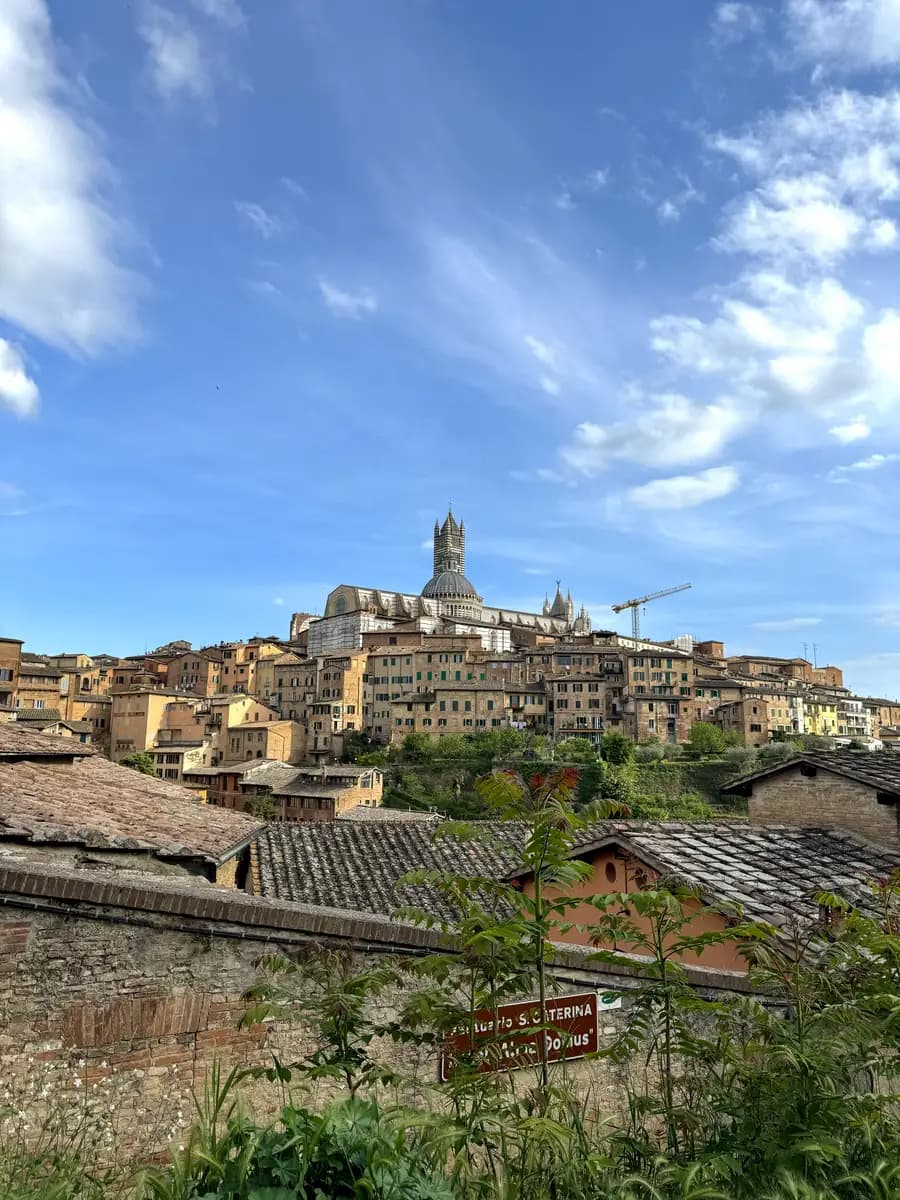
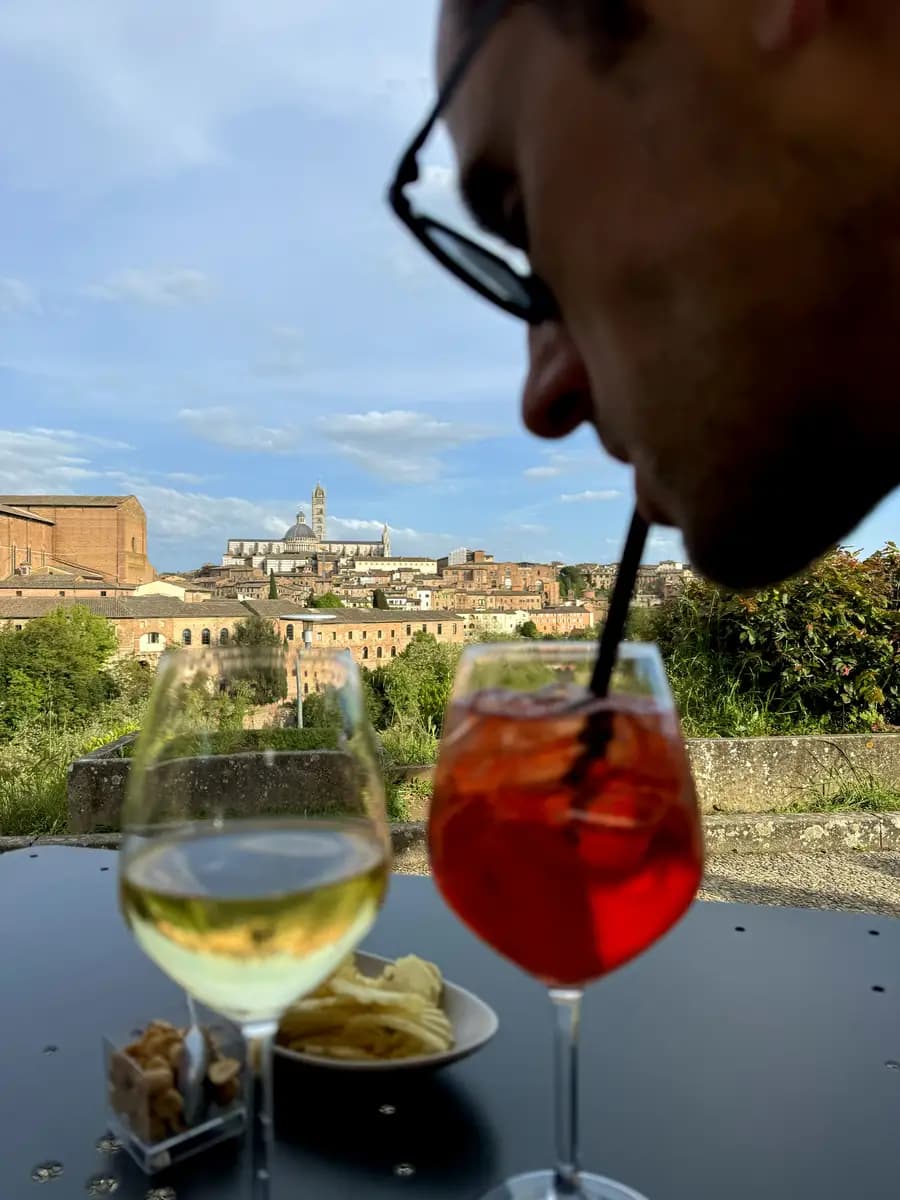
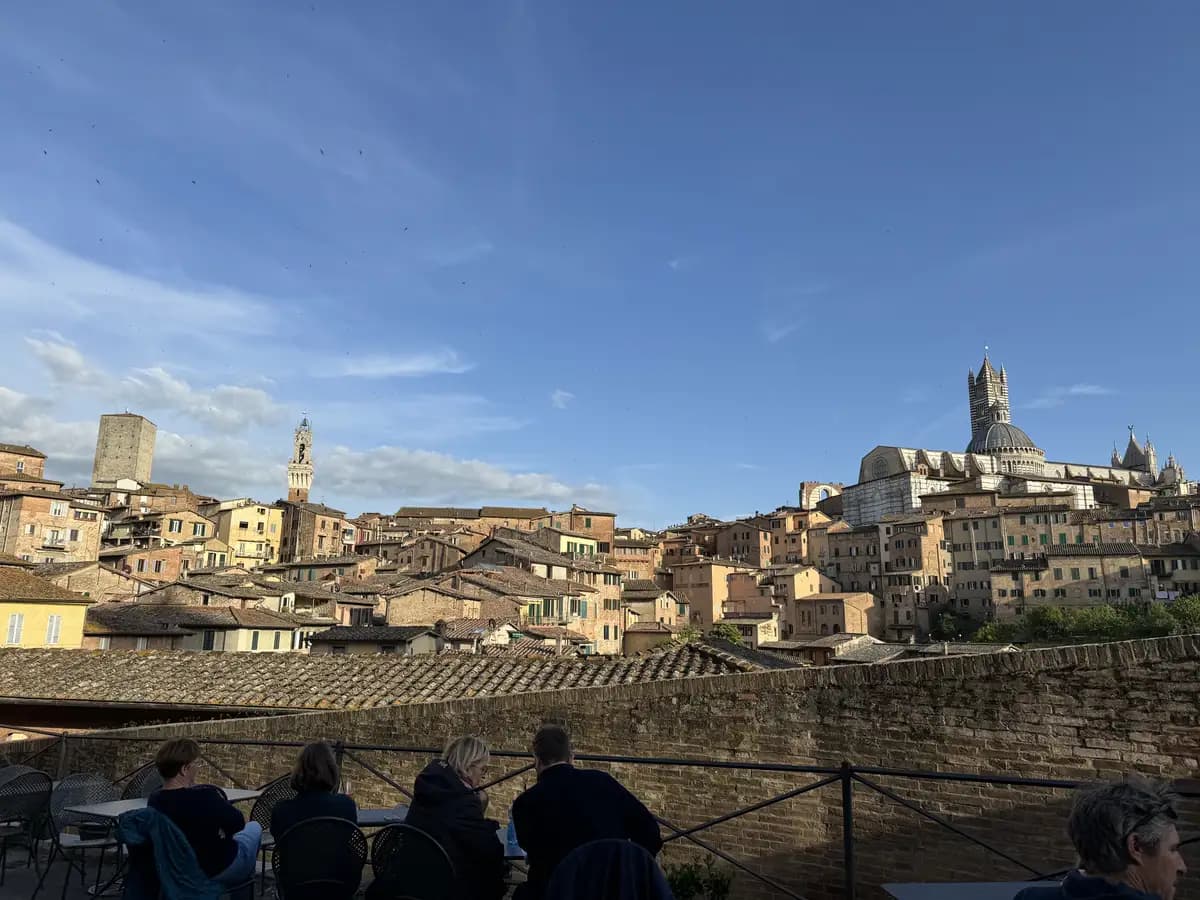
After all those steps, you’ve earned a drink. From this vantage point, the views of Siena’s skyline are unmatched. To celebrate the end of our 48-hour adventure, we went to Prosperino Bistrot for an aperitivo. In my opinion, this place has the best view of the entire city.
Sitting there with a drink, looking out over the endless terracotta rooftops, is a proper way to wrap up 48 hours in Tuscany. It’s a quiet spot to decompress, skip the noise of the main square, and call the trip a success before heading home.
| Timeframe | Stops |
| Day 1: The Val d’Orcia | Montepulciano ➔ Montalcino ➔ Bagno Vignoni ➔ Pienza |
| Day 2: Medieval Icons | San Gimignano ➔ Siena |
| The Base | Castiglion Fibocchi |
| Transport | Car |
Final Thoughts on 48 Hours in Tuscany
So, can you really do Tuscany in two days? Absolutely.
You’ll have to leave some things for next time (which is just a great excuse to come back!), but by using a quiet base like Castiglion Fibocchi and being smart with your driving routes, you can see the very best of the region.
From the lush, rain-freshened hills of Montepulciano and that perfect sunset aperitivo in Pienza, to the medieval skyscrapers of San Gimignano and the grand, sweeping Piazza del Campo in Siena, it was a whirlwind in the best way possible. Getting to come back to a cozy fireplace at the end of each day made it feel like a proper retreat, even with all the driving.
It’s a 48-hour trip I’d do again in a heartbeat. If you’re short on time but want the real Tuscany, this is the route for you.