
A Day Trip on the Italian Riviera: Recco, Camogli, San Fruttuoso & Portofino
One of my favourite days in Liguria was spent exploring the stretch of coastline between Recco and Portofino. It perfectly captures that classic Italian Riviera vibe: pastel fishing villages, hidden coves, and just the right amount of effortless glamour. It’s a handy trip to do in one go, and you get a serious amount of variety for very little effort. You start with the best focaccia in the country and end with a drink in one of the most famous harbours in the world—which is a decent result by anyone’s standards.
Getting to the Coast: Driving vs. Trains
If you’re coming down from Milan, you have two main ways to do this. We decided to drive, which is a straightforward enough trip that takes about two hours. Having a car gives you a bit more freedom to move at your own pace.
The Parking Situation:
We actually got lucky and found a spot relatively easily, but it’s worth noting that we visited in April. During this period, you have more chances of finding a space without too much of a headache. However, if you’re heading down in the peak summer months, it’s a different story. Parking in Liguria can be a bit of a nightmare—it’s expensive and spaces are tiny—so if you’re driving in July or August, get there as early as possible or prepare to spend a while circling around.
The Train Alternative:
If you don’t fancy dealing with the motorway or the parking situation, the train is a handy alternative.
There are frequent direct trains from Milan Centrale to Genoa. Once you’re in Genoa, you just hop on a local train to Recco (about a 30-minute journey). It’s a stress-free way to do it, especially if you want to have a few glasses of wine with lunch and you don’t have to worry about the drive back.
Start the Day in Recco: The Focaccia Capital
Recco might not have the postcard fame of its neighbours, but it’s the best place to start your day for one very specific reason: the food. It’s essentially the culinary gateway to the coast, and skipping it would be a mistake.
The Must-Try: Focaccia di Recco col Formaggio
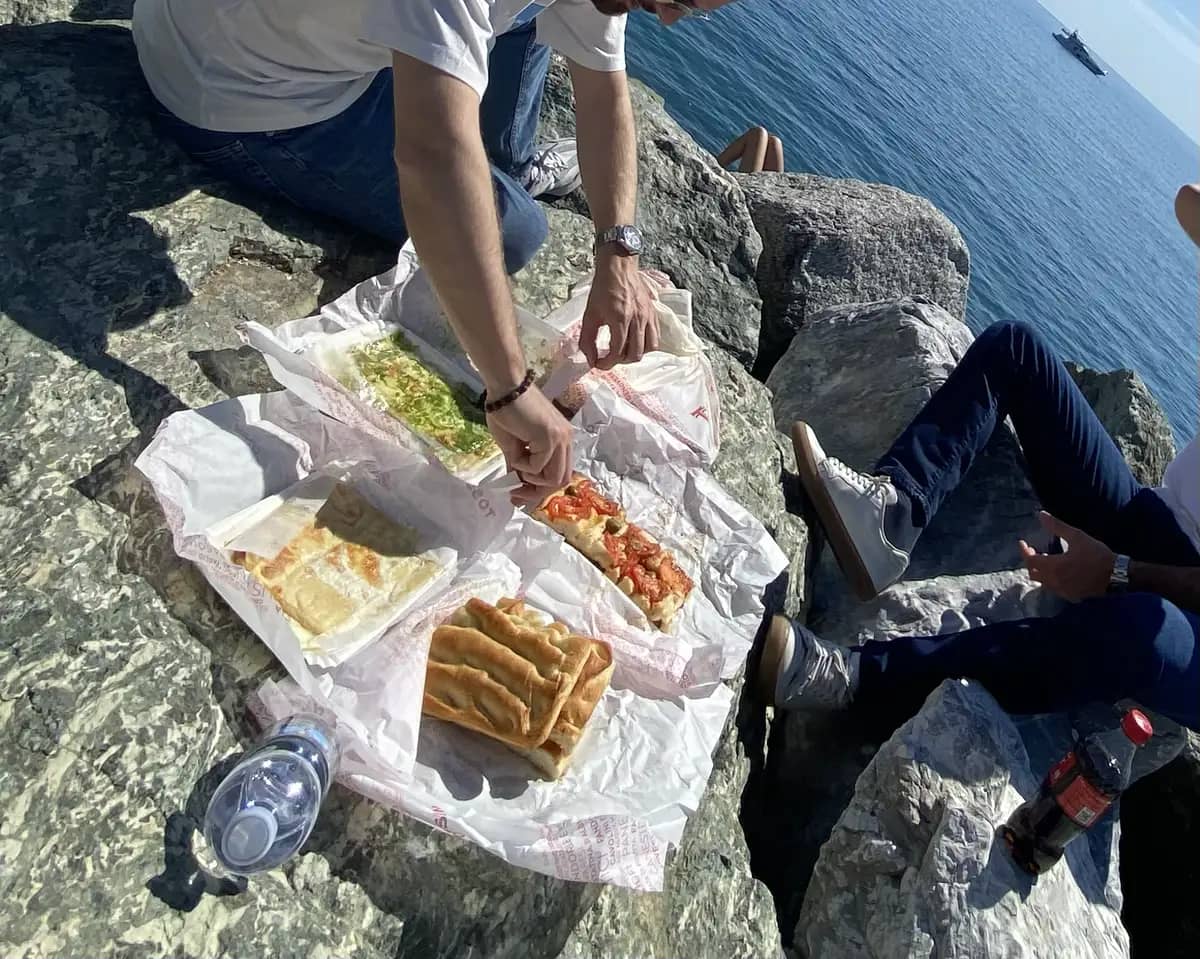
Forget what you think you know about focaccia. This isn’t the thick, bready version you may know of before. The Recco version is paper-thin, crispy and gooey all in one and is stuffed with melted stracchino cheese.
The Pesto Alternative: If cheese-filled bread isn’t really your thing, you’re still in the right place. Liguria is the birthplace of pesto, and you’ll see it on everything here. Most bakeries in Recco will have a version of focaccia topped with a thick layer of local pesto. It’s a solid alternative and a good way to tick off another regional classic before you even leave the first town.
Where to Find it: just look for any local bakery with a sign that says “Panificio.” There are plenty scattered throughout the town, and they’re all serving the real deal. Grab a slice (or a whole tray), take it down to the seafront, and eat it while the cheese is still hot.
The Best Way to Travel: The Golfo Paradiso Ferry
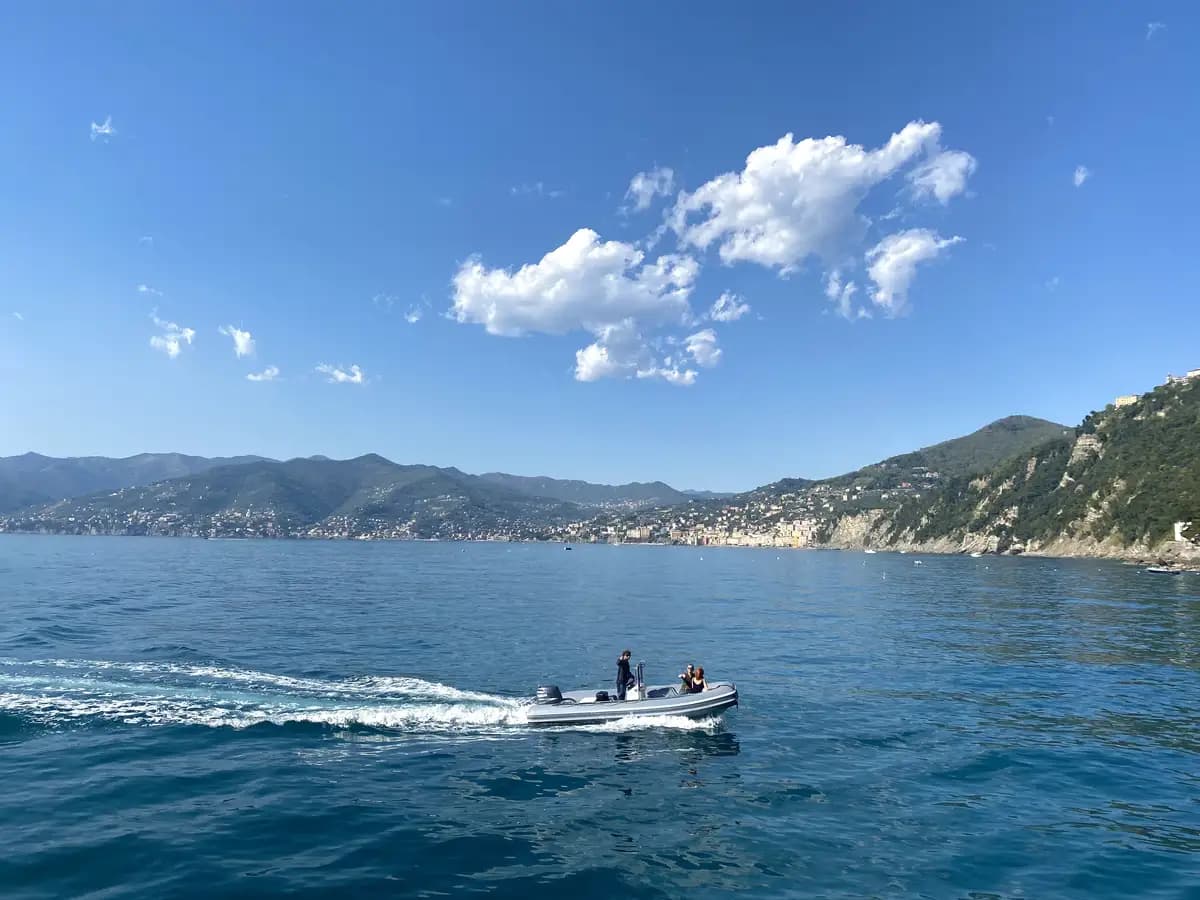
The Golfo Paradiso ferry line connects the villages along the bay, so we parked up in Recco and took the ferry. The best views of this coastline are 100% from the sea.
Ferry Logistics & 2026 Rates
The boats are frequent enough, but the morning runs typically happen between 9:30 AM and 11:30 AM. It’s worth checking the schedules on the morning you leave, as the weather can change things quickly—if the water gets even slightly choppy, the boats stop running. You can check the rates and the schedules [here] on their website.
We opted for the Recco to San Fruttuoso round-trip ticket for €19, with this ticket you are also able to hop-on, hop-off at Camogli. If you’d only like to go to Camogli you can find a return ticket for only €5.00.
Stop 1: Camogli – The “Postcard” Riviera
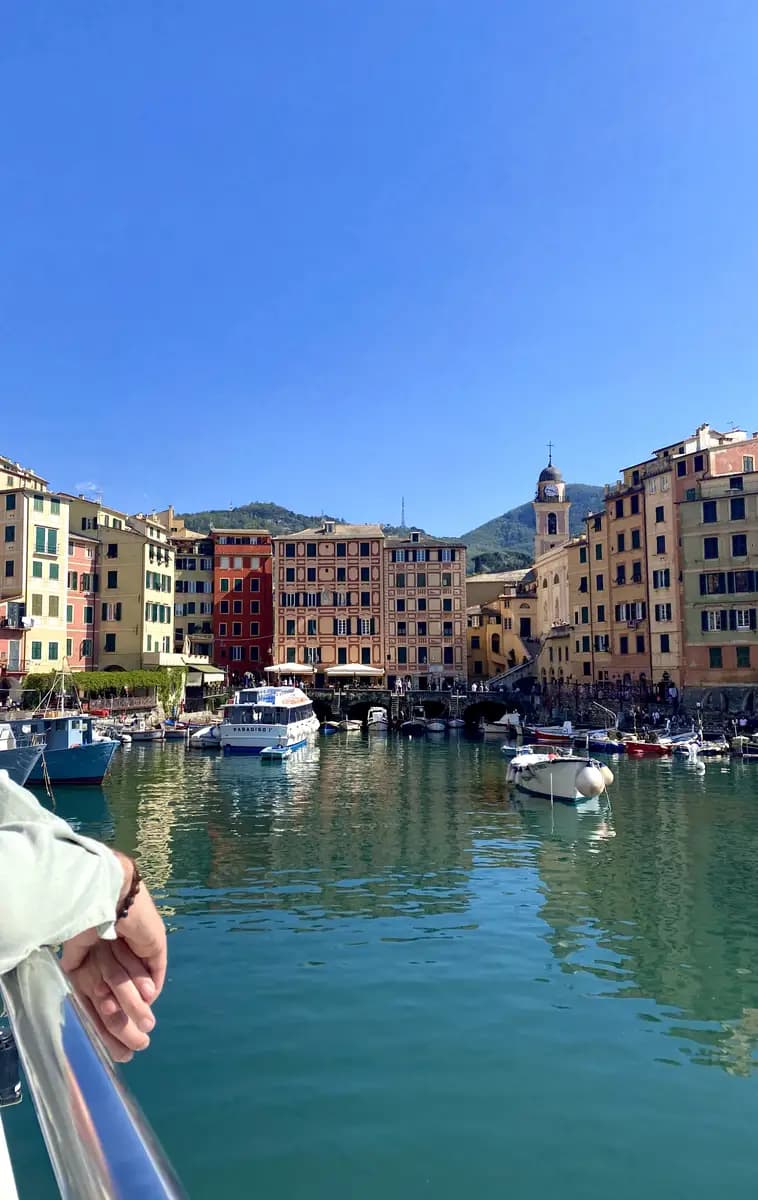
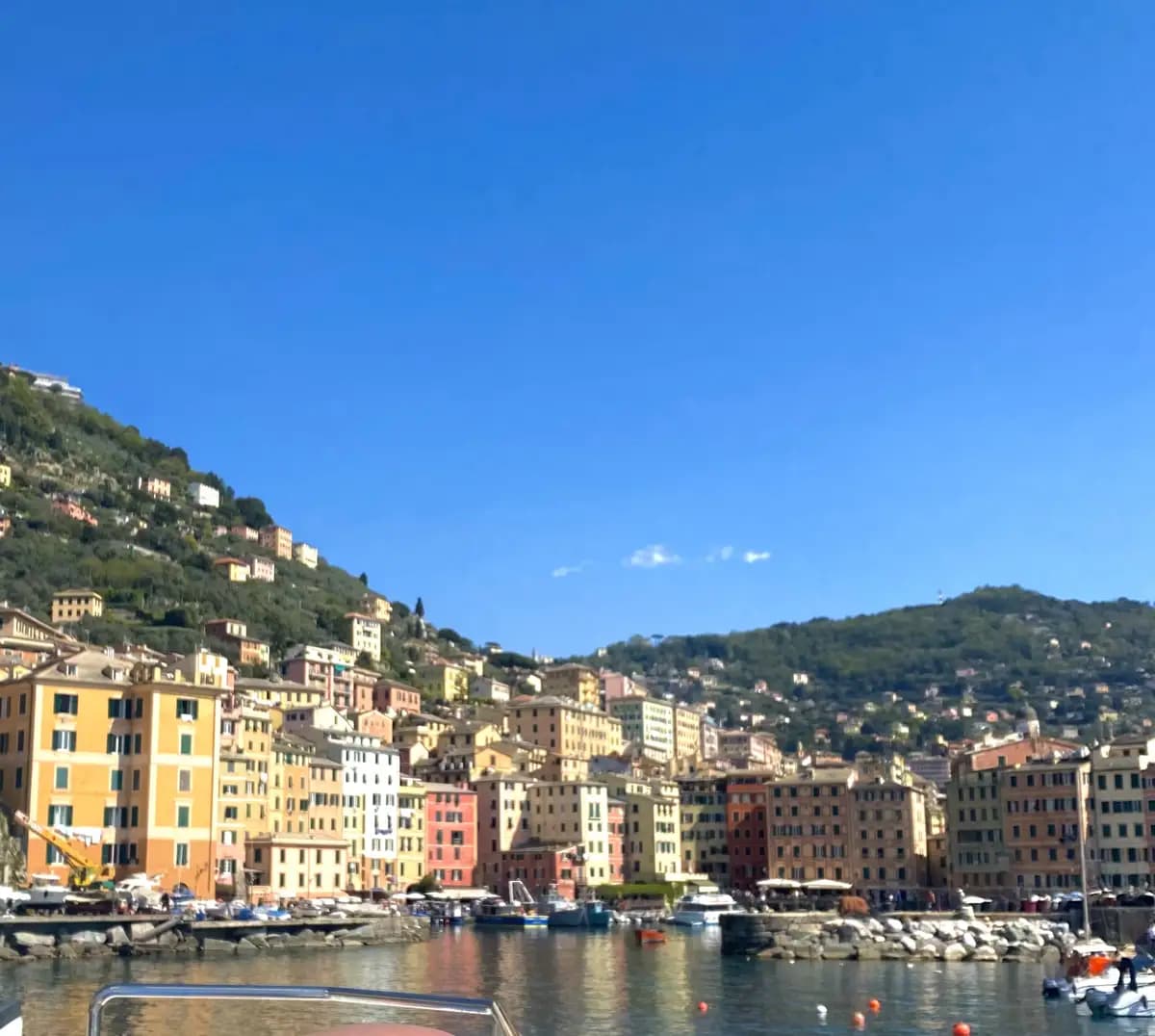
As you pull into the harbour, the first thing you’ll notice are the rows of tall, colourful houses lining the water. They are painted in those classic Ligurian oranges and pinks, and while the story goes that it helped fishermen find their way home, there is actually a much more practical—and slightly tighter—reason for the way they look.
The Great Window Tax Trick
If you look closely at the facades, you’ll notice that many of the windows, shutters, and even the marble windowsills aren’t real. They are painted on using a technique called trompe-l’œil (which basically means “fools the eye”).
Back in the late 1700s, the Republic of Genoa introduced a “window tax.” The more windows your house had, the more you had to pay. To get around it, the locals simply bricked up their extra windows to save a few Euros, then hired artists to paint them back on. It allowed them to keep their houses looking symmetrical and “grand” (there’s that word again!) without actually having to pay the tax. You’ll even see some with cats or flower pots painted into the frames.
A Solid Spot for a Wander
Camogli is a handy size for a quick visit. It’s the kind of place where you don’t need a strict plan. Just walk along the pebble beach, have a look at the fishing boats, and soak up the atmosphere for an hour or two before you head back to the pier for the next leg of the ferry.
Stop 2: San Fruttuoso – The Abbey in the Cove
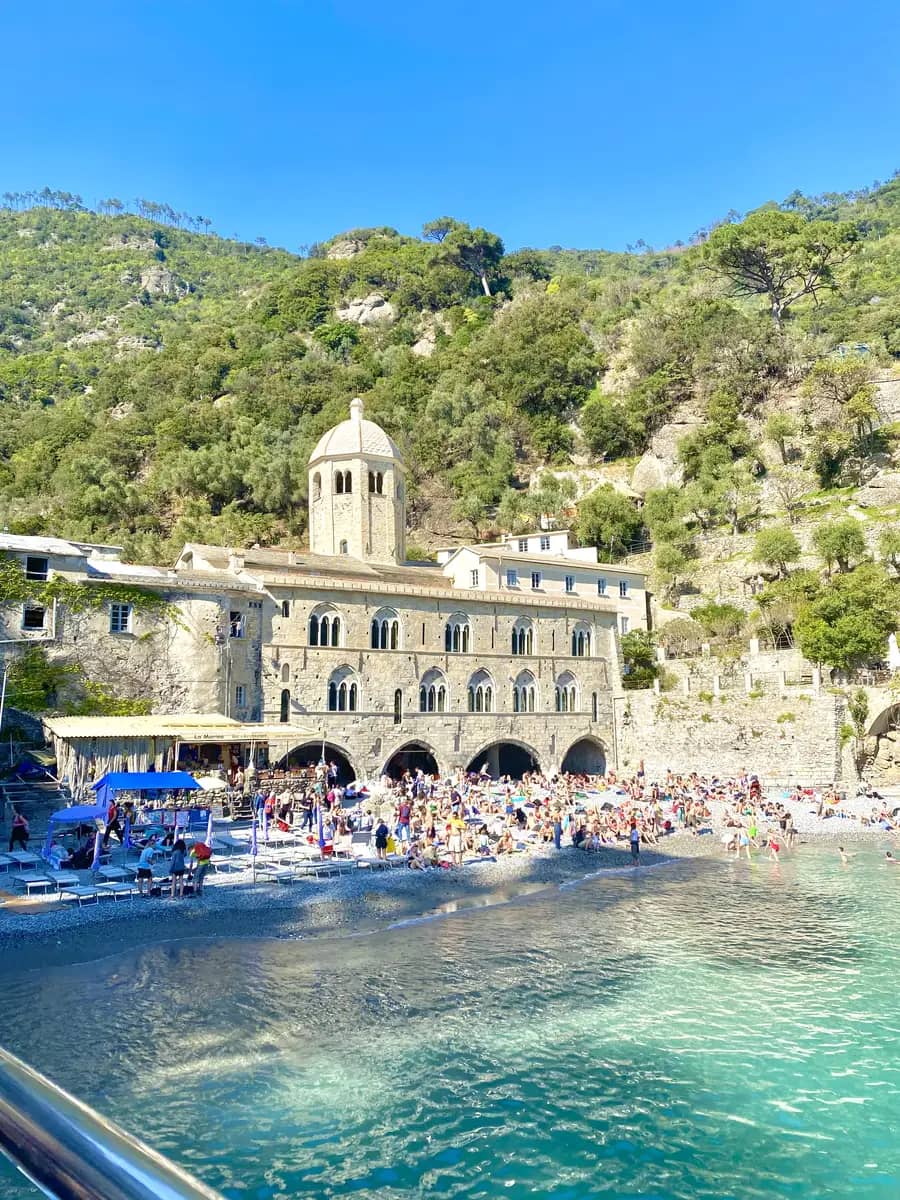
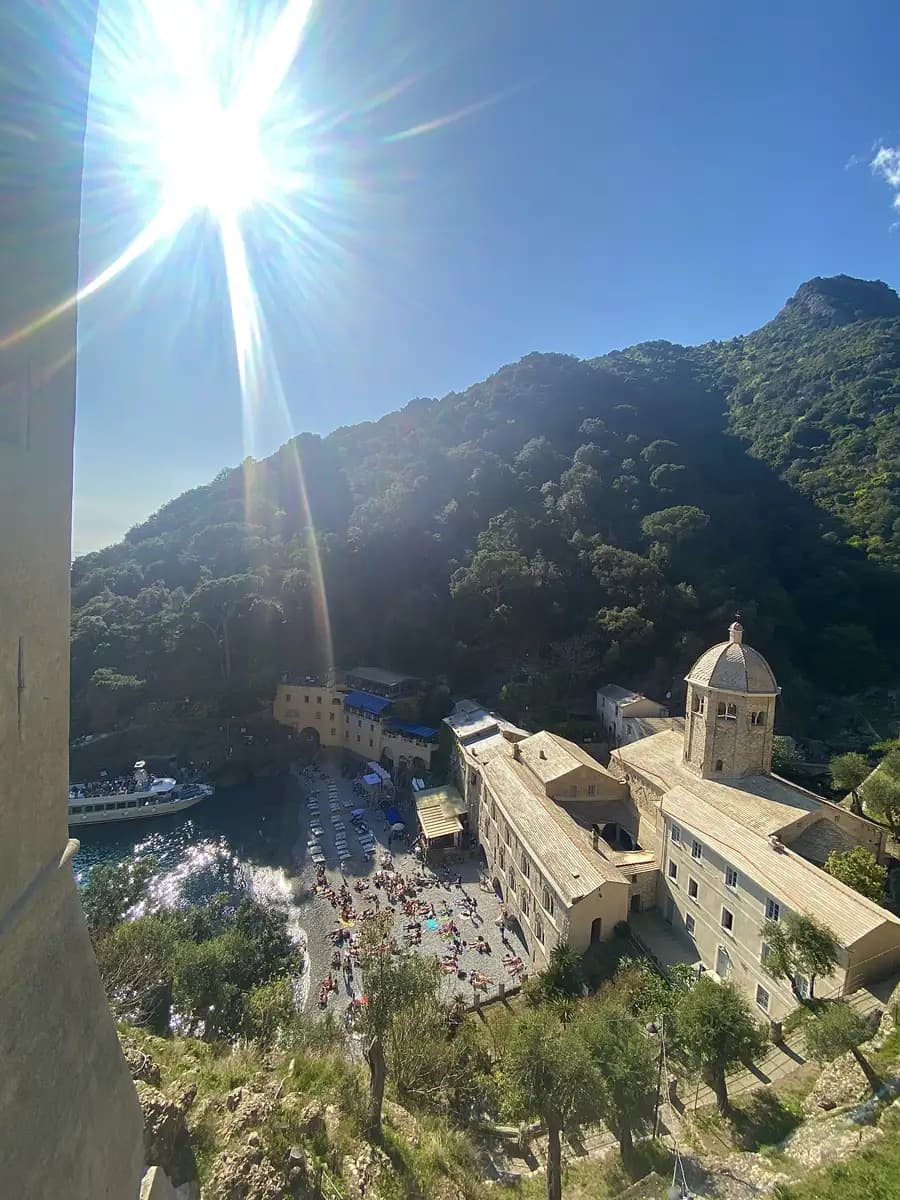
This is a “hidden” bay that you can only reach by boat or by hike. It’s home to a 10th-century Abbey sitting right on the sand, and as the boat slowed down to enter the cove, I remember thinking that if this isn’t paradise, it’s a very close second.
Getting the Best View
We didn’t actually go in for a swim ourselves, but there were a few brave souls in the water making the most of the cove. Instead of staying on the beach, we headed up the path to the side of the Abbey to the Torre Doria (Doria Tower). The Tower wasn’t open but the view from up here is magnificent. Well worth the steps!
Beyond the Beach
Aside from the view, you can pay to visit the inside of the Abbey itself. If you happen to be a diver, this is also the spot where the famous Christ of the Abyss statue sits underwater. If you’re staying on the surface like us, it’s just a great place to sit for an hour and soak up the quiet before hopping back on the boat for the next leg.

Portofino: The Famous Finish
Once you’ve finished up in San Fruttuoso, you can hop back on the boat for the return leg to Recco. From there, it’s a quick enough 25-minute drive to Portofino. It is easily the most famous village in Italy.
A lot of people will tell you that you have to hike up to Castello Brown for the postcard view from above. It’s a solid walk if you have the energy, but we decided to stay at sea level. If you aren’t in the mood for a climb after a full day of exploring, don’t sweat it—the view from the harbour itself is exactly what you see in the photos anyway.
The Aperitivo Strategy: Is it worth it?
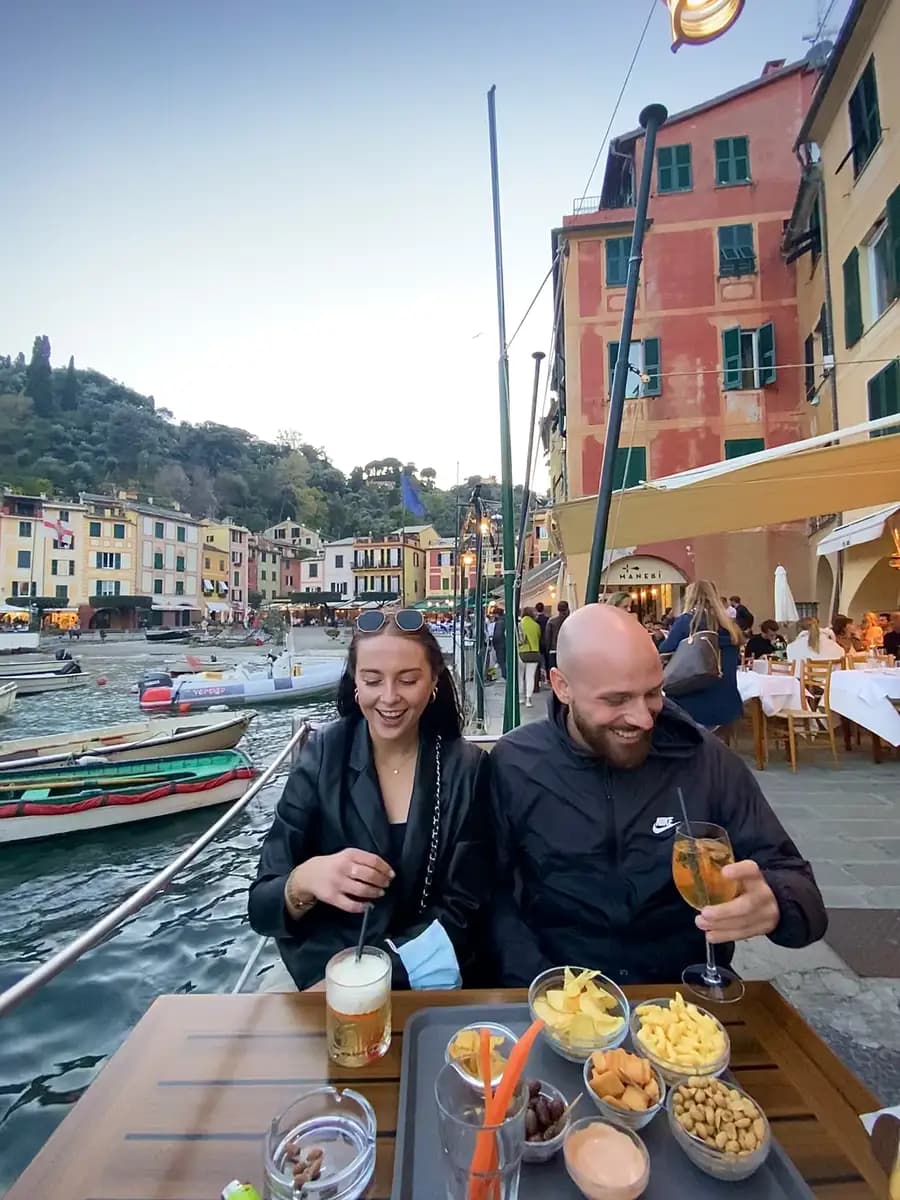
The main sport in Portofino is sitting by the water and watching the world go by. If you fancy a pricey aperitivo right in the middle of the harbour, I say go for it.
We did, and while the bill might make you wince slightly when it arrives, sitting right on the water’s edge with a drink in hand while watching the yachts is a decent way to end the day. You’re paying for the seat and the atmosphere, but for a one-off experience, it was 100% worth it for the view.
The Final Stop: Sunset at La Rotonda di Camogli
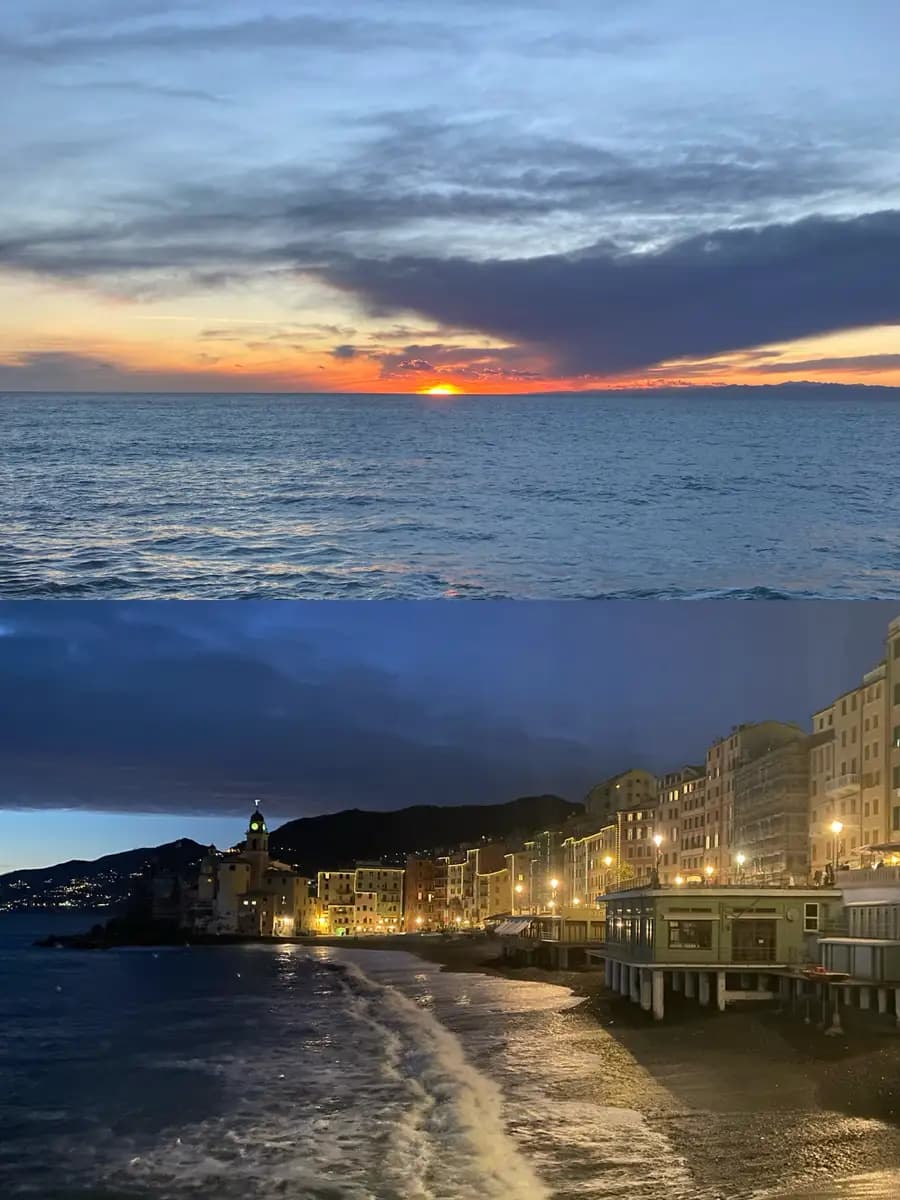
On the way back toward Milan, the sky started turning a decent colour, and it looked like the sunset was going to be worth sticking around for. We decided we couldn’t just drive past, so we pulled back into Camogli to see the day out in style.
The Best Seat in Town: La Rotonda
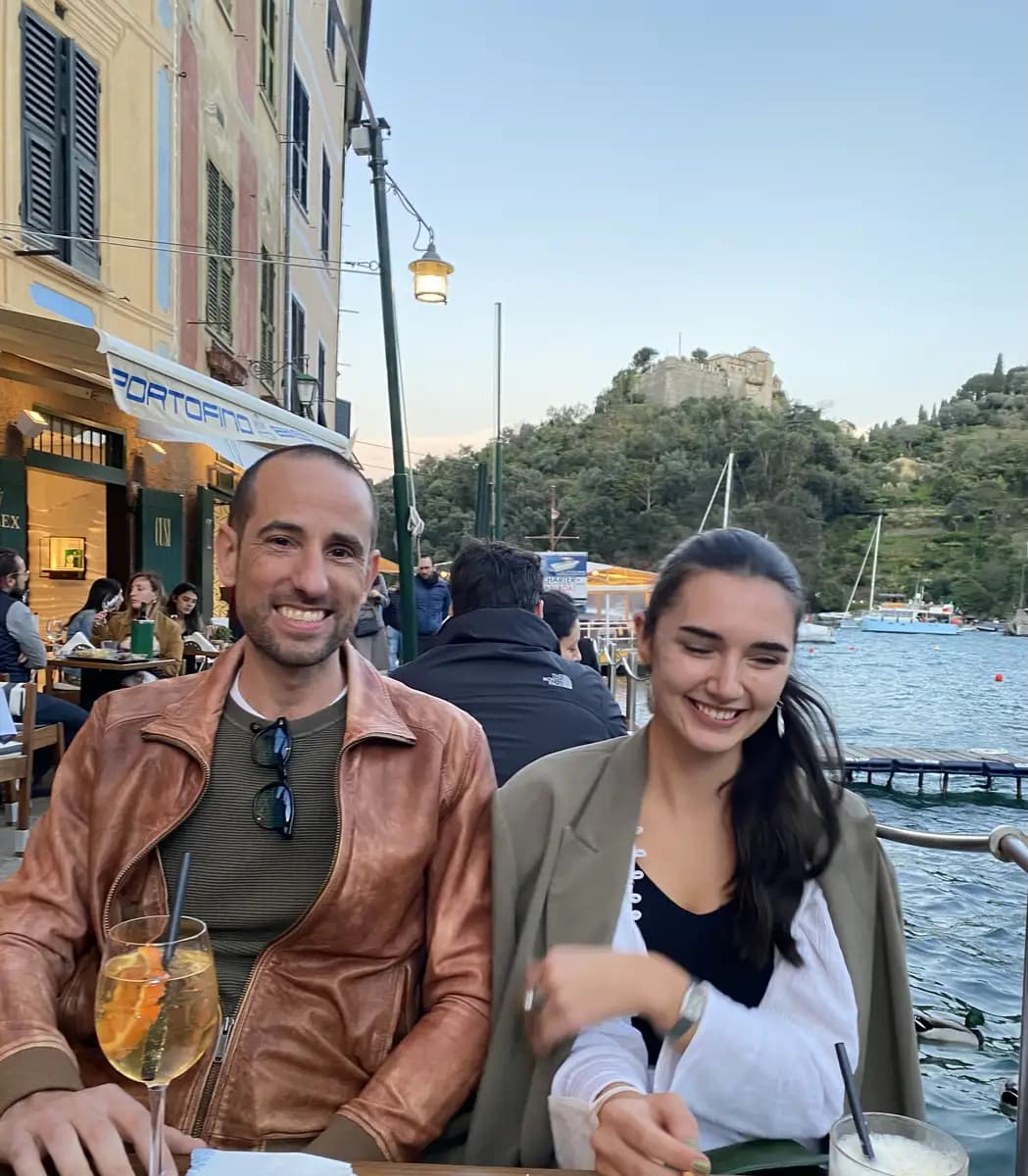
We headed for La Rotonda di Camogli. It’s a spot with a terrace that sits right on the edge of the water, and honestly, it’s easily the best spot for watching the sun dip into the Mediterranean.
The drink of choice was a Hugo Spritz and it was a solid way to finish up the day and far better than sitting in motorway traffic for another hour. It gave us a bit of a “second wind” for the final stretch of the drive back to Milan.
Planning a Longer Trip to Liguria?
If a one-day run from Recco to Portofino isn’t enough, you’re in the right part of the world. This stretch is just one piece of the puzzle when it comes to the Italian Riviera.
Where to stay in the Italian Riveira:
If you’re wondering where to actually stay, have a look at why I think [Sestri Levante is the best base camp] for exploring this entire region.
Looking to go the Cinque Terre?
If you’ve managed this stretch of the coast and still have a bit of life left in your legs, the next logical move is to head further south. The Cinque Terre is the heavy hitter of the region—it’s significantly busier than Recco or Camogli and requires a bit more tactical planning, but it’s a solid day out if you do it right. I’ve put together a straightforward guide on how to navigate the trains, dodge the worst of the crowds, and see all five villages in a single run. [Read my One-Day Cinque Terre Itinerary here]