The Ultimate 8 Day Dolomites Itinerary: Big Views At A Steady Pace
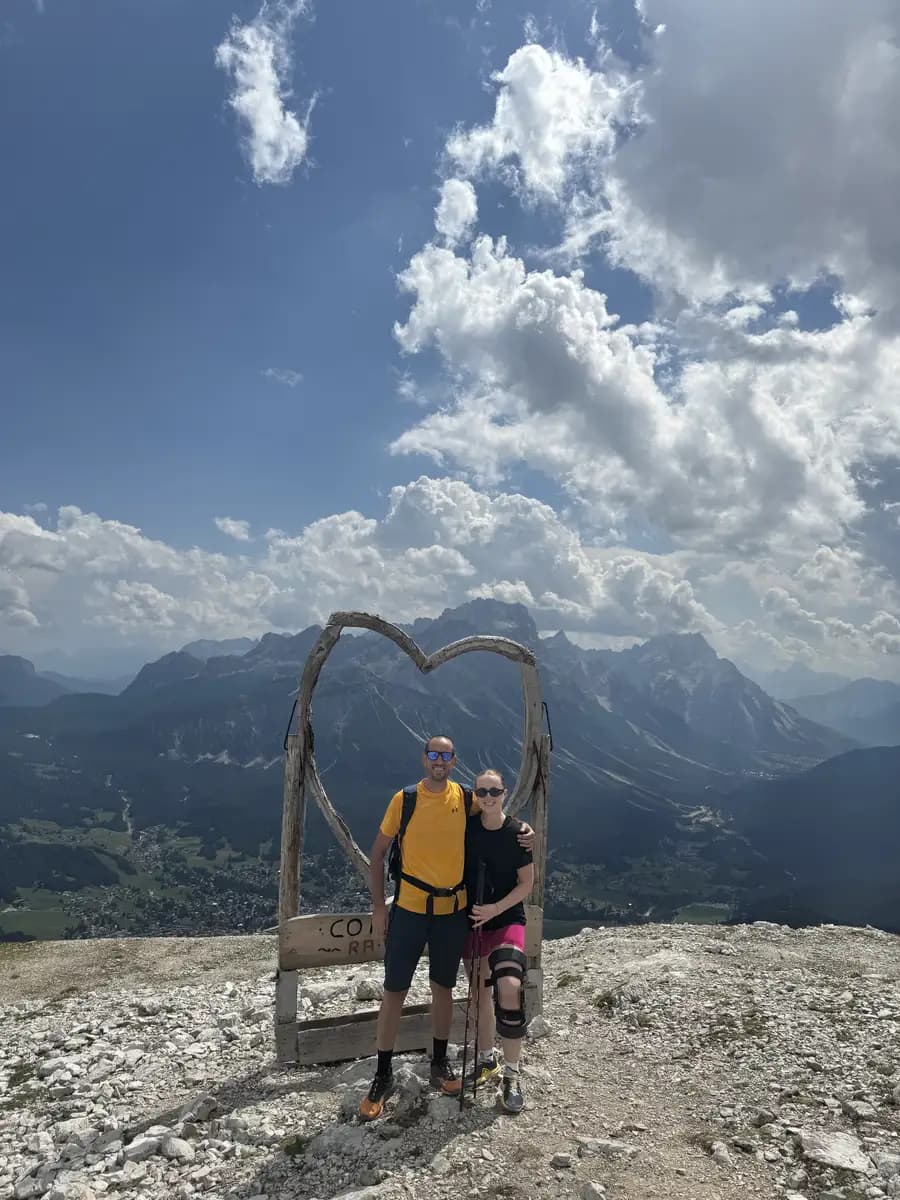
A lot of people think that to see the best of the Dolomites, you need to be a professional hiker capable of trekking 10 kilometres every single day. While there is no shortage of world-class trails for those who want to push themselves, the reality is that this region is also incredibly accessible. I travelled to the Dolomites while recovering from a damaged ACL. This trip was my proof that you can still experience the dramatic highlights of Northern Italy using a bit of strategy.
Day 1: History and Mountain Welcomes
Vajont Dam: A Sombre Lesson in the Power of Nature
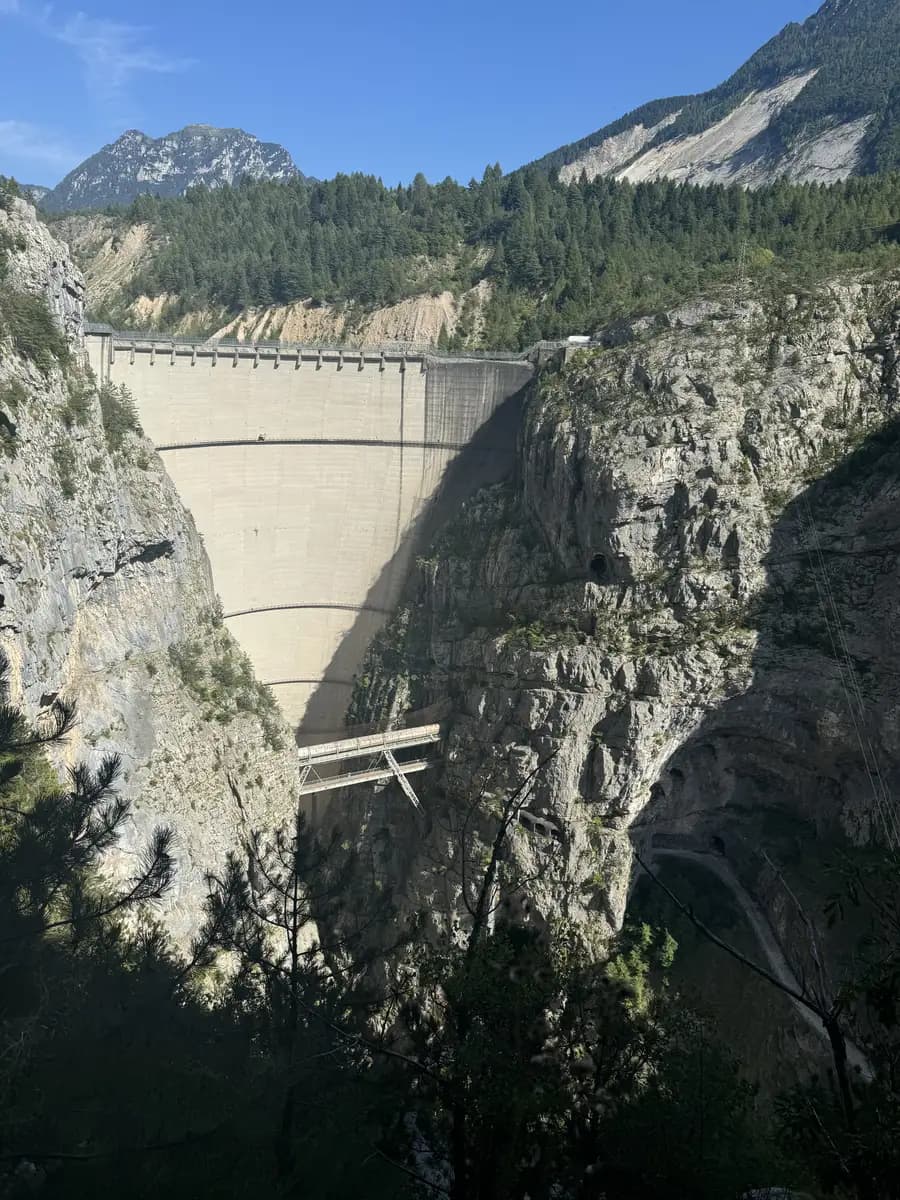
We made a stop at the Vajont Dam (Erto e Casso), and honestly, the sheer scale of it is hard to wrap your head around. Standing at 262m high, it remains one of the tallest dams in the world, but it’s the history behind it that really stops you in your tracks.
On 9 October 1963, what was meant to be a feat of engineering turned into a tragedy. During the initial filling of the lake, a massive landslide crashed into the water, triggering a mega tsunami. An estimated 50,000,000 m3 of water surged over the top of the dam in a colossal 250m wave.
The wall of water tore through the Piave Valley below, destroying several towns and claiming between 1,900 and 2,500 lives. In a bit of a surreal twist, the dam itself remained almost entirely intact, while the world beneath it was changed forever.
Walking around today, seeing the resilience of the villages like Erto and Casso is a powerful experience. It’s a quiet, reflective place that puts the true force of the mountains into perspective. It isn’t just a photo op; it’s a piece of history you can really feel as you move through it.
Check-in: Hotel Boite
We arrived at Hotel Boite in Borca di Cadore just in time to settle in. After a quick shower, we headed down to the bar for our complimentary welcome drink which was a nice touch to start the holiday.
We opted for the half-board option at the hotel, and I highly recommend it. The food was a genuine highlight of our stay. It was such a relief not to have to hunt for dinner spots after a long day of exploring; we just tucked in and relaxed.
Full disclosure: We paid for our stay at Hotel Boite in full. This isn’t sponsored in anyway. If you do decide to book through my links, I earn a small reward to help support my travel page
Day 2: Lakeside Realities and the Perfect Picnic
The Hotel Breakfast Standard
We started the morning at the hotel. In my opinion, this is the best breakfast variety you’ll find in the Dolomites. It gave us plenty of fuel for the day ahead.
First Stop: Calalzo di Cadore
We drove out to Calalzo di Cadore first. The lake is lovely and makes for a great photo, but don’t bother looking for a perimeter walkway around the edge of the lake. Google Maps insists there is a path around the lake, but we can confirm it doesn’t exist! It led us straight into a field in the middle of nowhere. My advice? Just enjoy the view from the shore and move on.
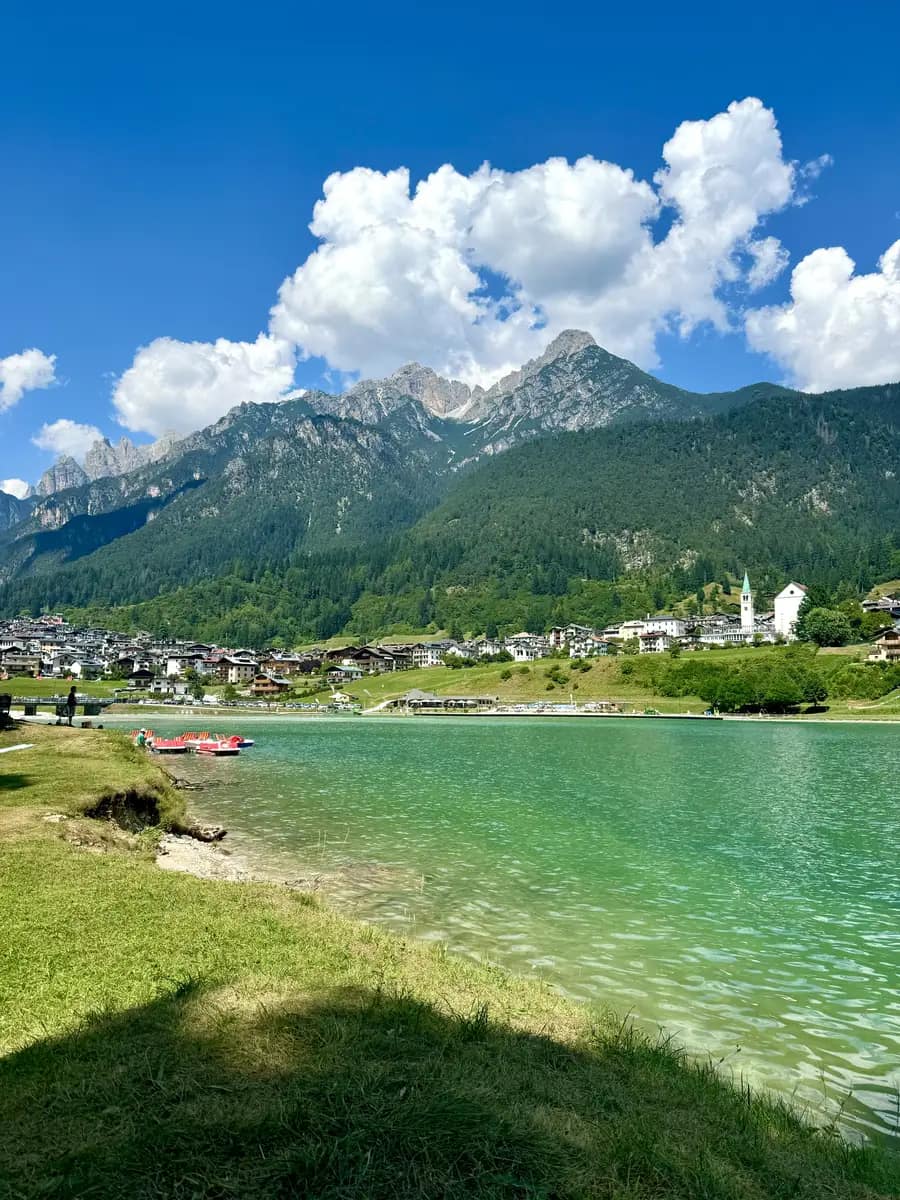
Lunch at Auronzo Lake (Lago di Santa Caterina)
For lunch, we headed into the town of Cadore and stopped at the Spar supermarket.
The Plan: Pick up fresh local bread and speck to make your own paninis.
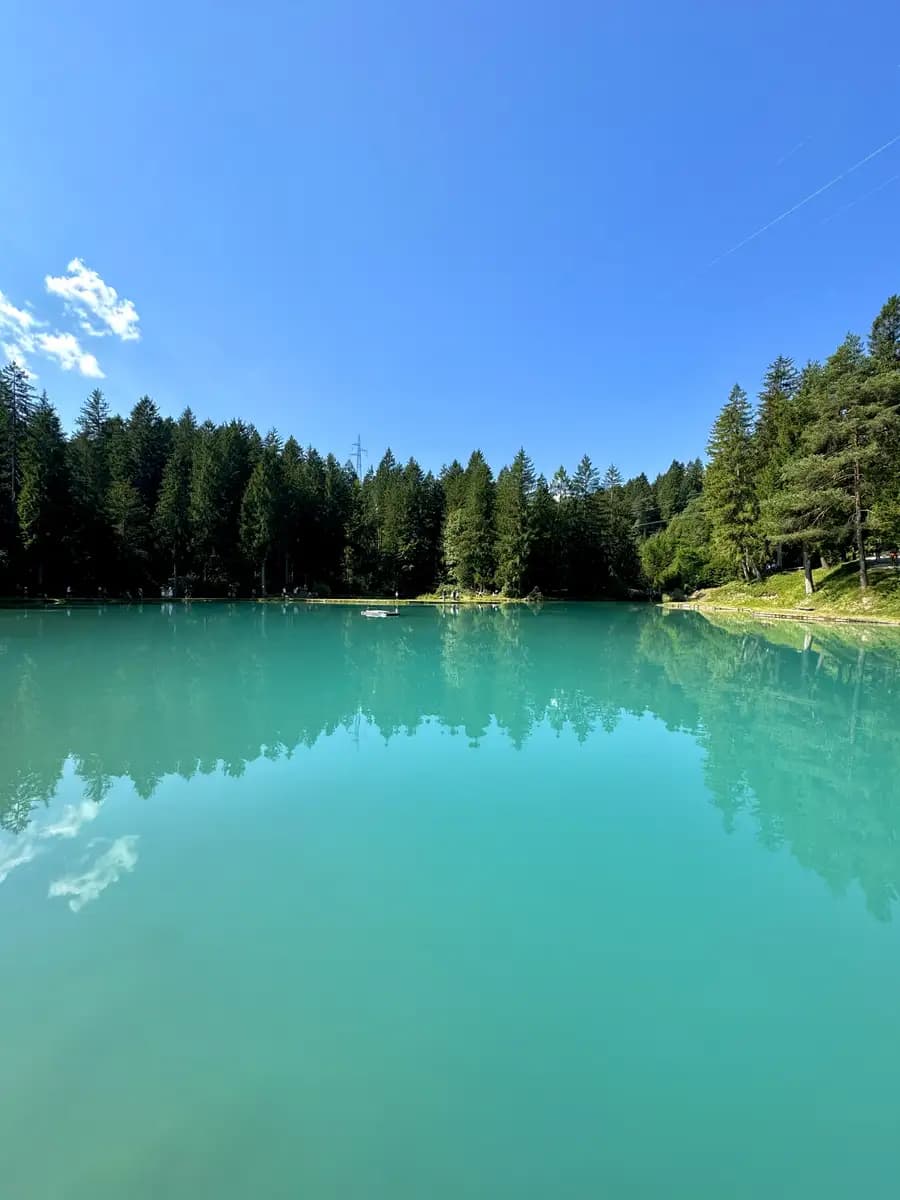
The Spot: Drive to the banks of Auronzo Lake to eat.
Sitting by the water with a fresh, handmade panini was easily one of the most relaxing and amazing moments of the entire trip. We headed back to Hotel Boite that evening for another excellent dinner and a bit of rest.
Day 3: Reaching the Clouds in Cortina
The Tofana di Mezzo Cable Car
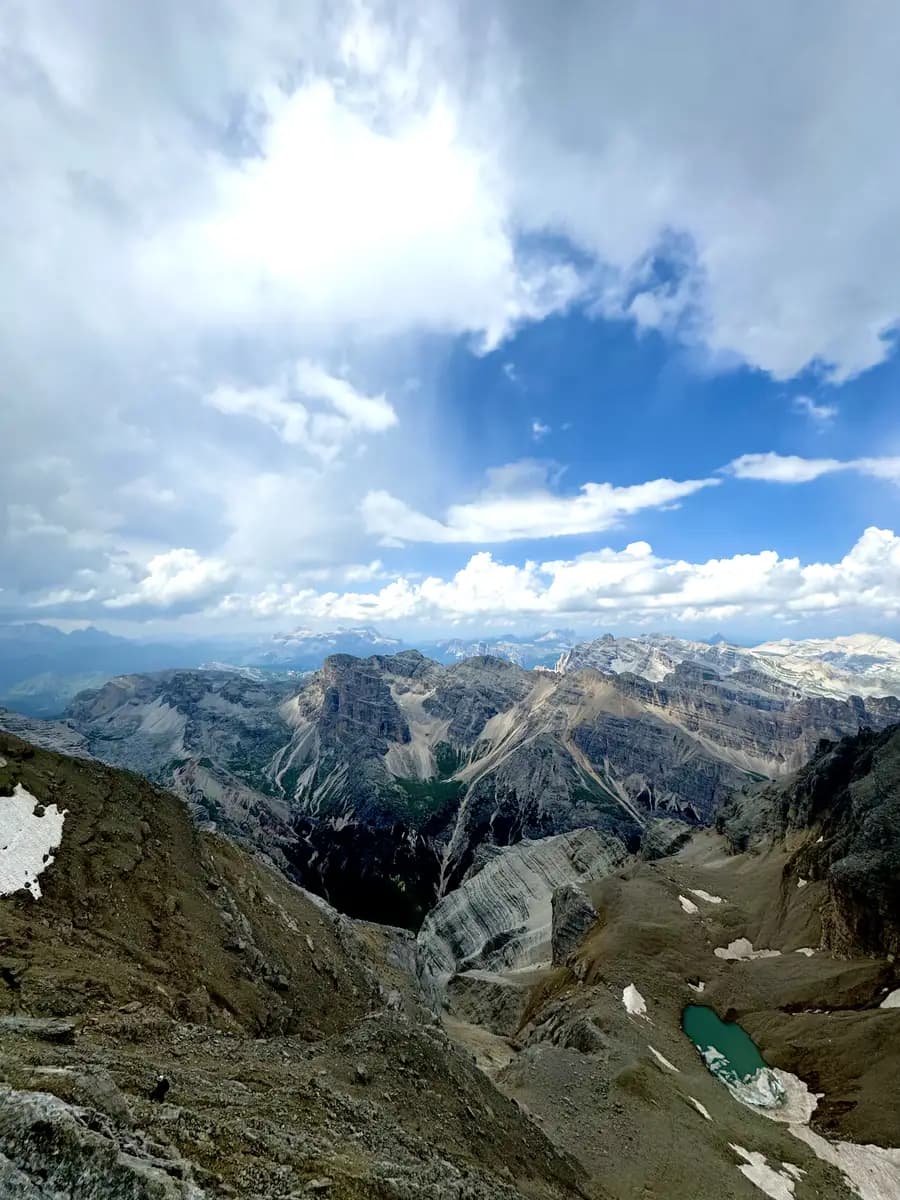
Today was about letting the cable cars do the hard work. We headed to Cortina to catch the lift up towards Cima Tofana di Mezzo.
On the way up, we stopped at Ristorante Pizzeria Col Drusciè. We sat outside with a coffee and a tart, just soaking up the mountain air. After a bit of roaming, we took the final lift up to the peak, which sits at a massive 3,244 metres above sea level. The views from up there are simply insane.
Peak-Side Picnic
Even in August, it gets quite chilly at that altitude, so make sure you bring a jumper. We explored the summit for a while before heading back down to the restaurant area. They have first-come, first-served tables and chairs, so we sat out in the sun and ate the paninis we’d brought along.
Afternoon in Cortina
Once we were back on solid ground, we spent the afternoon exploring the beautiful town of Cortina. It’s perfect for a bit of window shopping and an aperitivo before the short drive back to Borca di Cadore.
The View from the Balcony
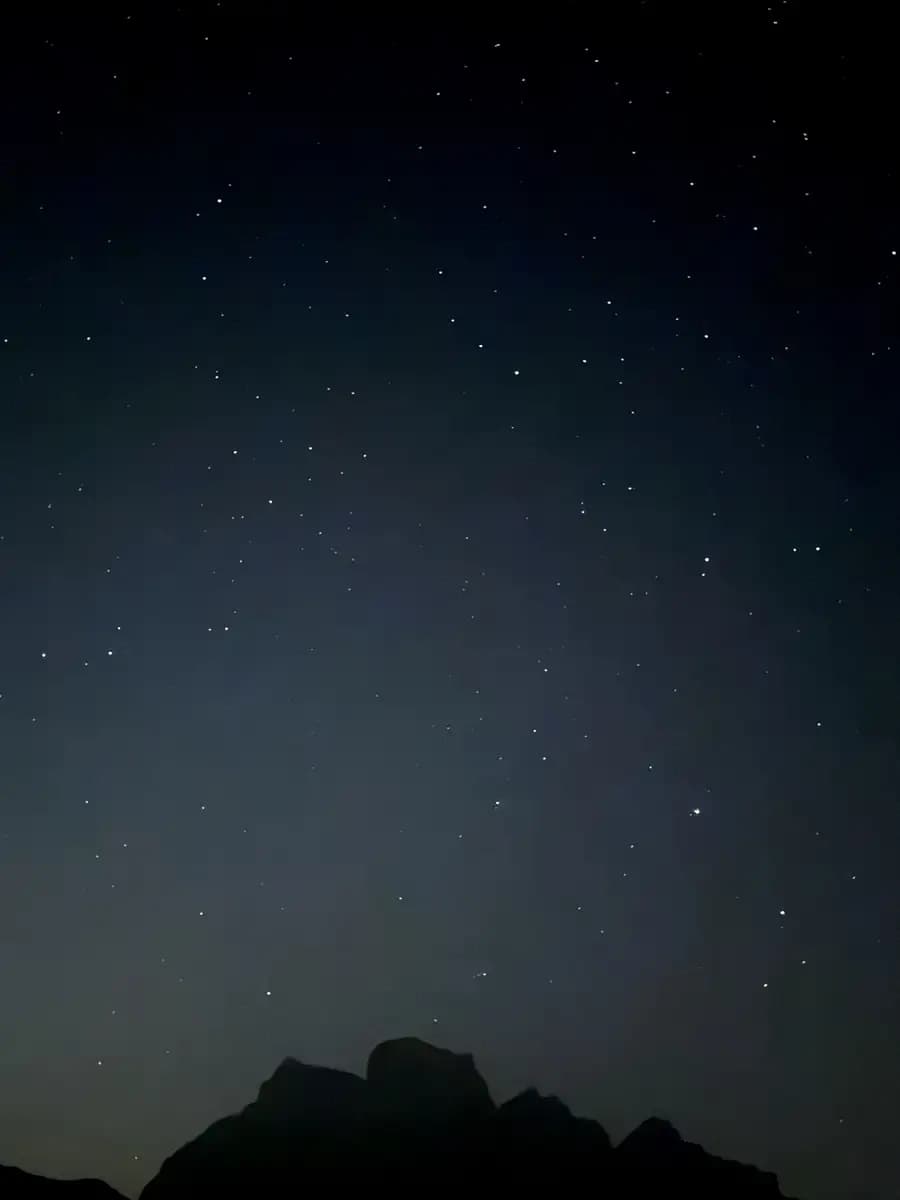
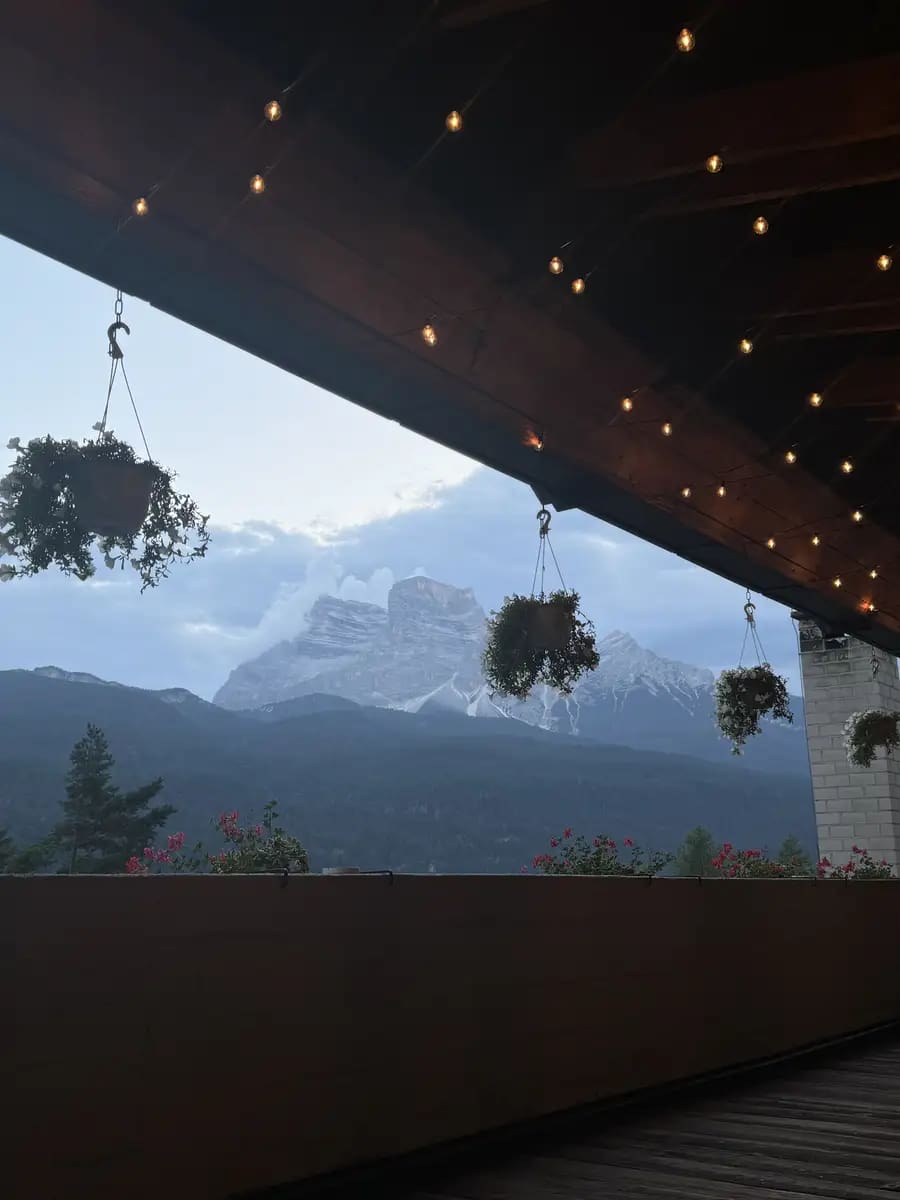
Before we head back out, I have to mention the views from Hotel Boite. Every morning and night, we were treated to the sight of the Monte Pelmo massif and Mount Rite. There is something incredibly grounding about seeing those peaks from your own balcony, especially at night when the stars are out. It’s the kind of view that makes even an outdated bathroom feel like a luxury.
The Verdict: Hotel Boite
4/5 Stars ⭐⭐⭐⭐
- The Best Part: The breakfast variety is incredible, and the half-board dinner is a total game-changer for both quality and convenience.
- The Staff: 10/10. Extremely welcoming and always happy to help.
- The Room: The bathrooms are a bit outdated, but they are currently renovating. Honestly, the mountain view from the balcony makes up for it. Looking out at the stars from the balcony at night was a highlight I won’t forget.
Day 4: Hidden Gems and High Plateaus
Lago di Dobbiaco: The Secret Lake
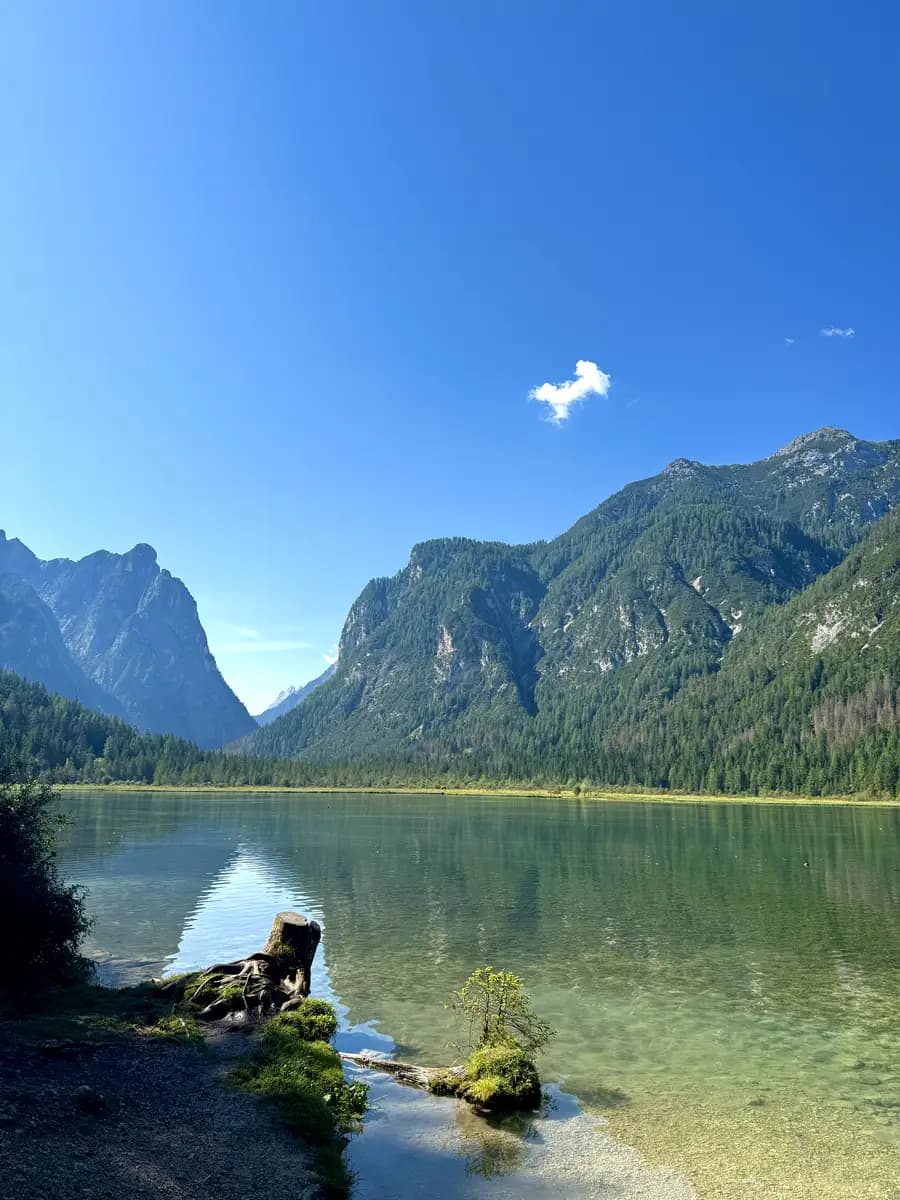
Day four took us to Lago di Dobbiaco, and honestly, it felt like a total hidden gem. Even though we visited in the middle of August, there was barely anyone there. It was so peaceful.
We did a gentle loop around the lake that led us into a forest where crystal-clear streams were running down into the water. We found a spot to perch by the lake to eat our (now legendary) paninis and just watched the fish and ducks swim by. I did try to dip a toe in, but I can confirm it is absolutely freezing!
A Lucky Find in Dobbiaco
After the lake, we drove into the town of Dobbiaco to explore. We happened to arrive on the 15th of August (Ferragosto), and the town was alive with a traditional parade. It was such a lovely, unexpected bit of local culture.
Prato Piazza (Plätzwiese): Views from 2,000m
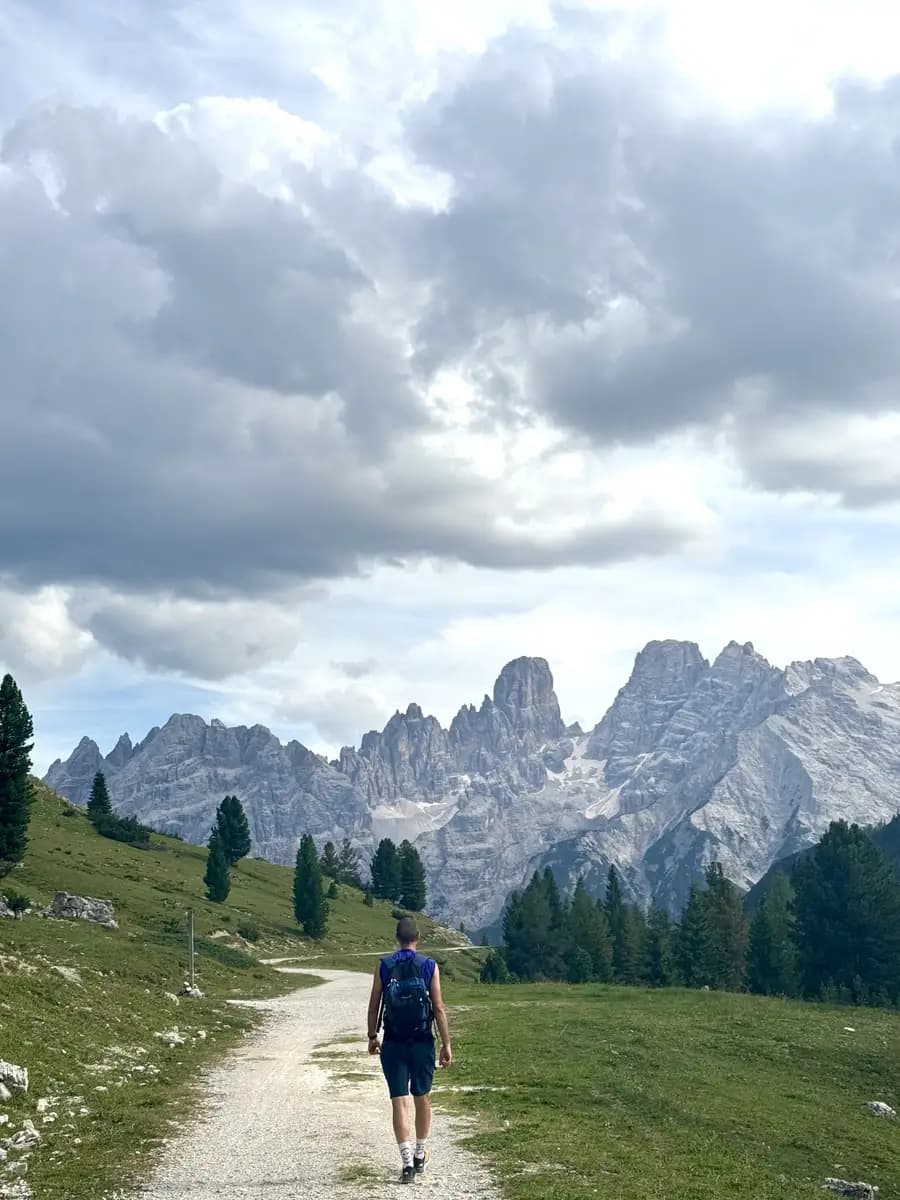
Our final stop of the day was Prato Piazza, and honestly, it was a massive highlight. Sitting at 2,000m above sea level, the views are spectacular in every direction. We parked up around 4:00 PM and went for a wander, but we actually had to cut it short because we ran out of light.
My advice? Dedicate a full day to this spot if you can it’s far too beautiful to rush. On the way back to the car, we stopped for a quick aperitivo at Rifugio Prato Piazza to soak in the last of the afternoon sun. It was the perfect way to end the day.
Essential Travel Tips: Winter Access & Parking
If you’re planning a trip during the winter season (late December to early April), the logistics can be a bit of a puzzle. Here is the simplified version so you don’t get caught out:
Driving Yourself: In winter, you can only drive up to Prato Piazza before 10:00 AM or after 3:00 PM. There is a toll for the road, and parking is capped at 100 cars. If it’s full, you’re out of luck.
The Cost: If you head up after 3:00 PM, it’s €7.00 for a car. During the day, parking at the bottom (Ponticello) is €6.00.
The Shuttle Alternative: If you’re visiting between 10:00 AM and 3:00 PM, you’ll need to park at Ponticello and hop on the shuttle bus. It runs every 30 minutes and takes about 15 minutes to reach the top.
Winter Gear: This is the mountains, after all winter tyres or snow chains are mandatory. Don’t risk the drive without them.
Vehicle Restrictions: If you’re in a camper van or a large coach (20+ seats), the road is a no-go zone year-round. Stick to the shuttle.
Planning a Summer Visit?
If you’re heading up in the warmer months, the rules shift again. Between July and September, the window for driving your own car is even tighter, and you’ll often need to pre-book a transit permit if you want to move through the valley during the day.
Before you set off, I’d highly recommend checking the Prags.bz official portal. It’s the most reliable spot to check the current traffic regulations and to book your shuttle or parking tickets in advance. It’ll save you a lot of hovering at a barrier wondering where it all went wrong.
Day 5: The Towers and the Climb
Cinque Torri
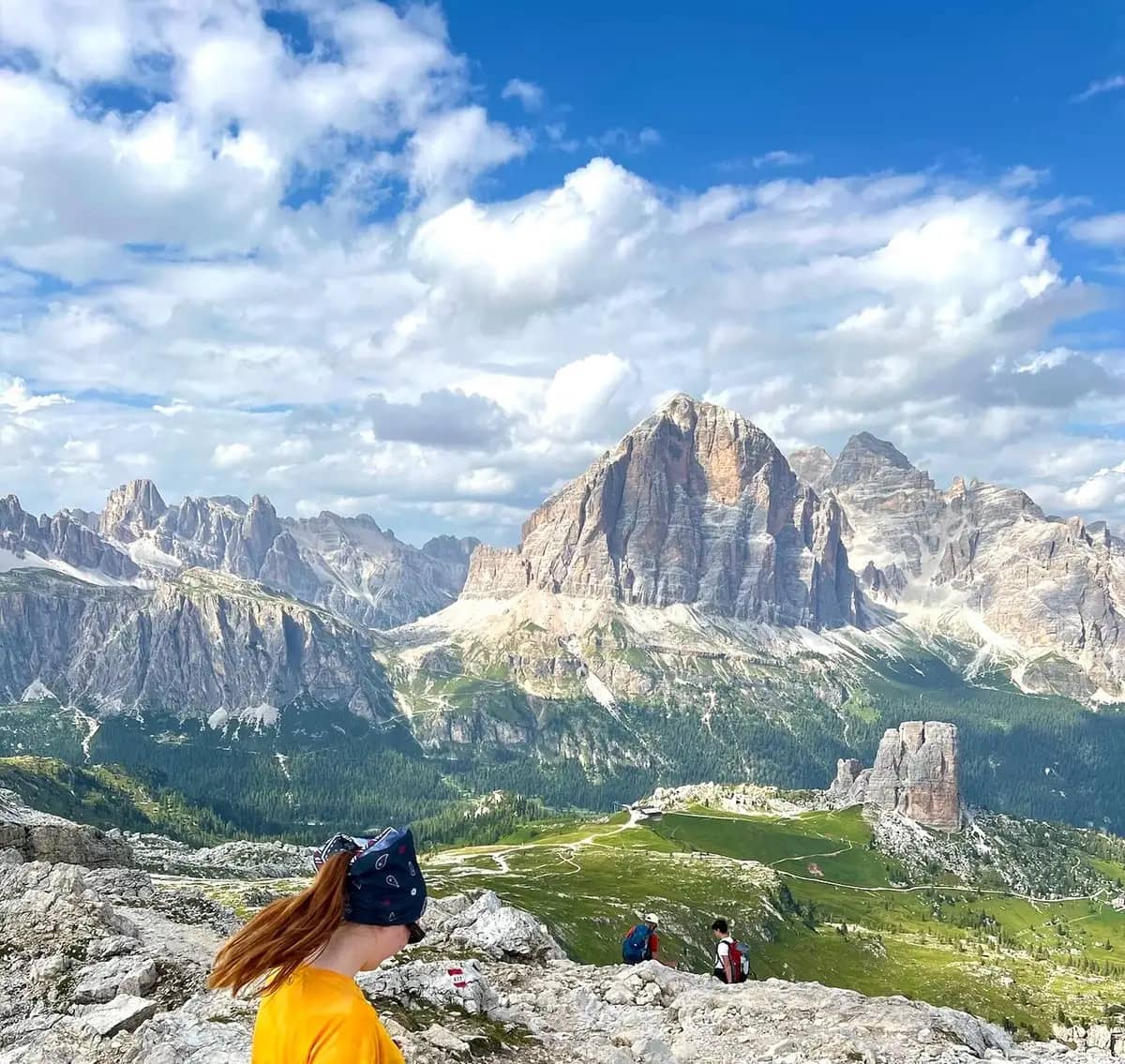
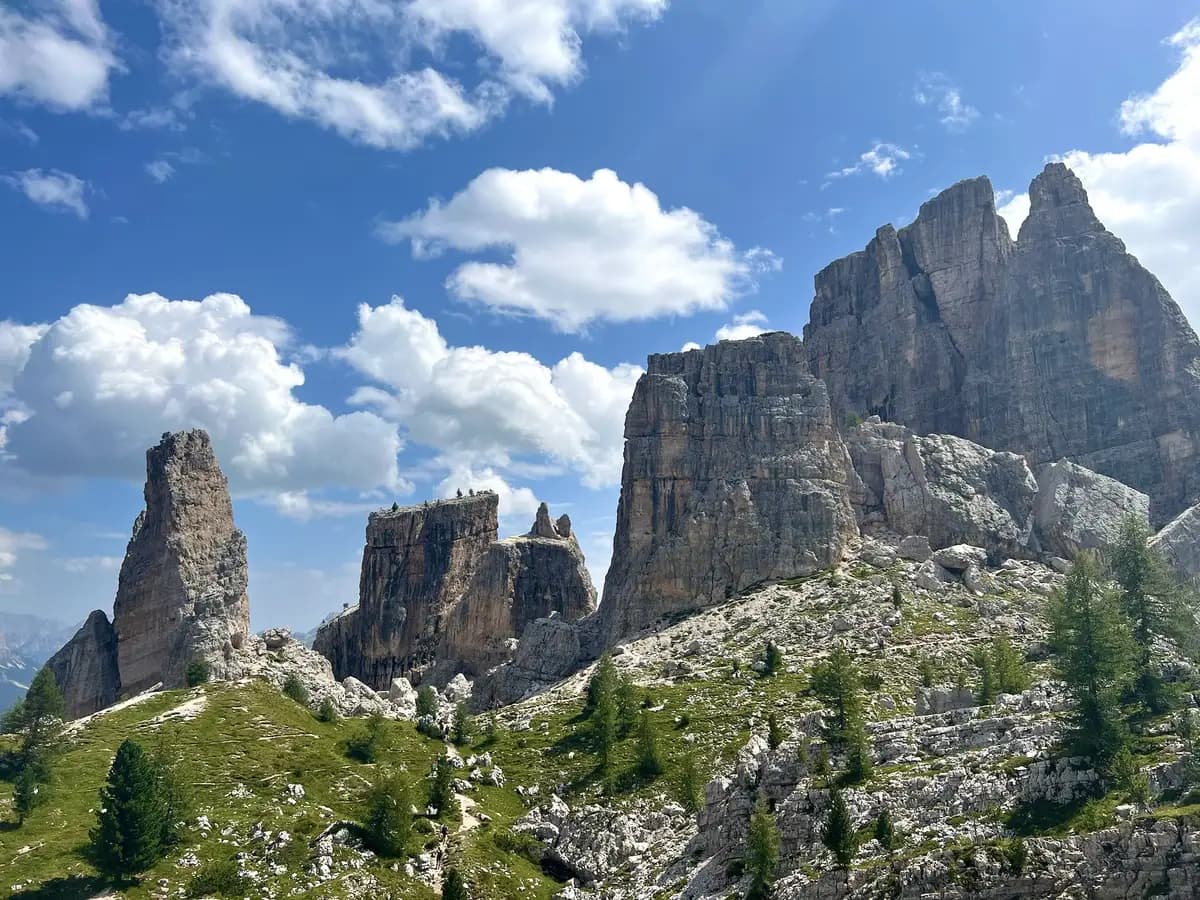
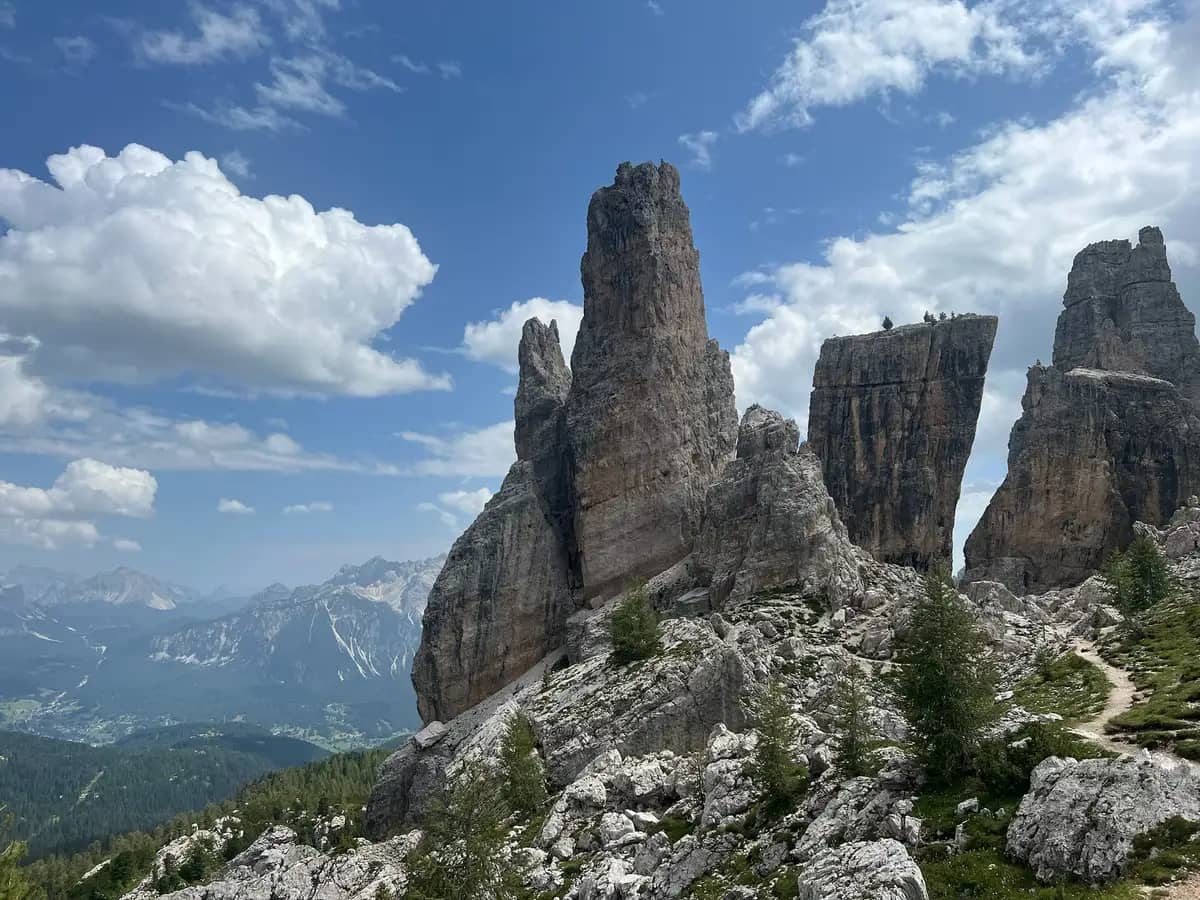
For day five, we’re heading to one of the most unique spots in the entire range. Breathtaking is a word that gets thrown around a lot in the Dolomites, but at Cinque Torri, it actually earns its keep. The rock formations here look like they’ve been dropped from the sky, and they are unlike anything else you’ll see on the trip.
Cinque Torri: Cable Cars and Iconic Peaks
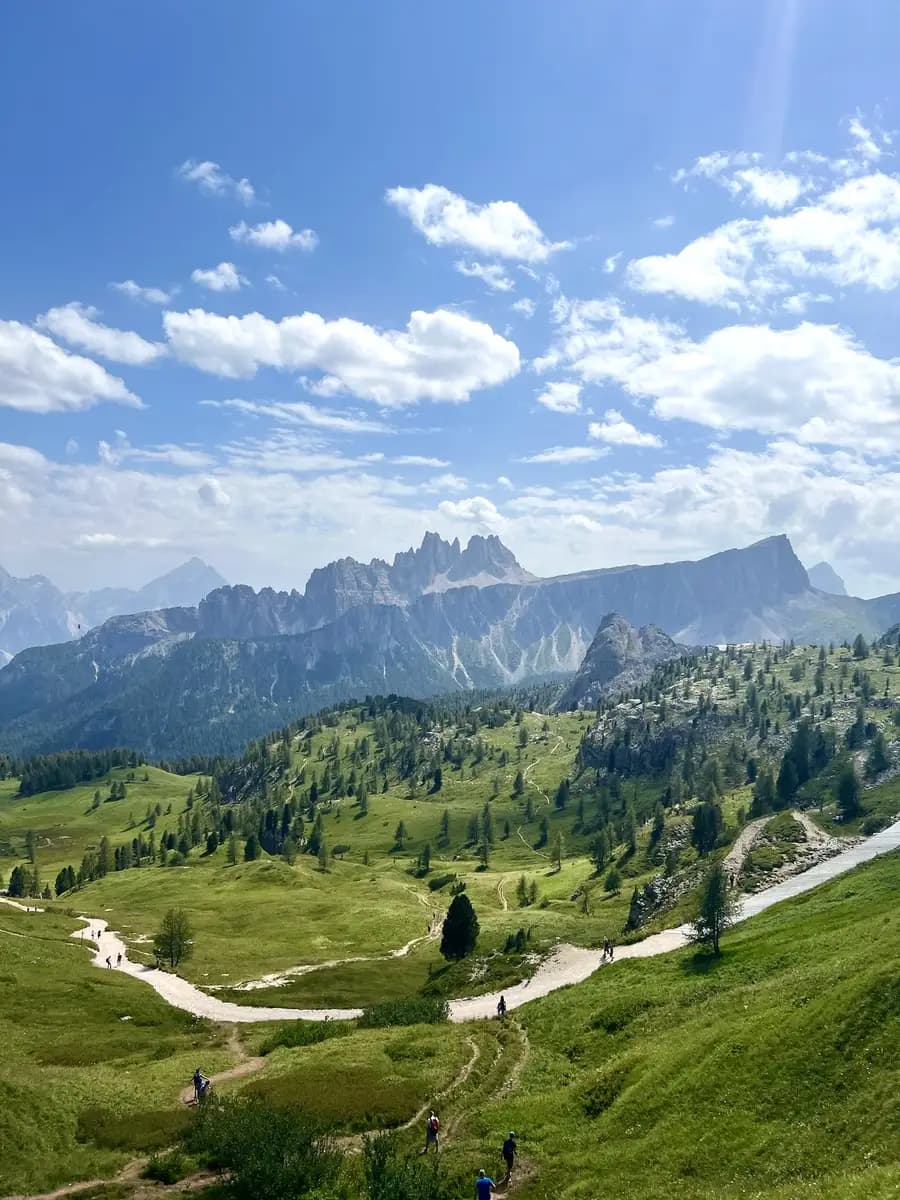
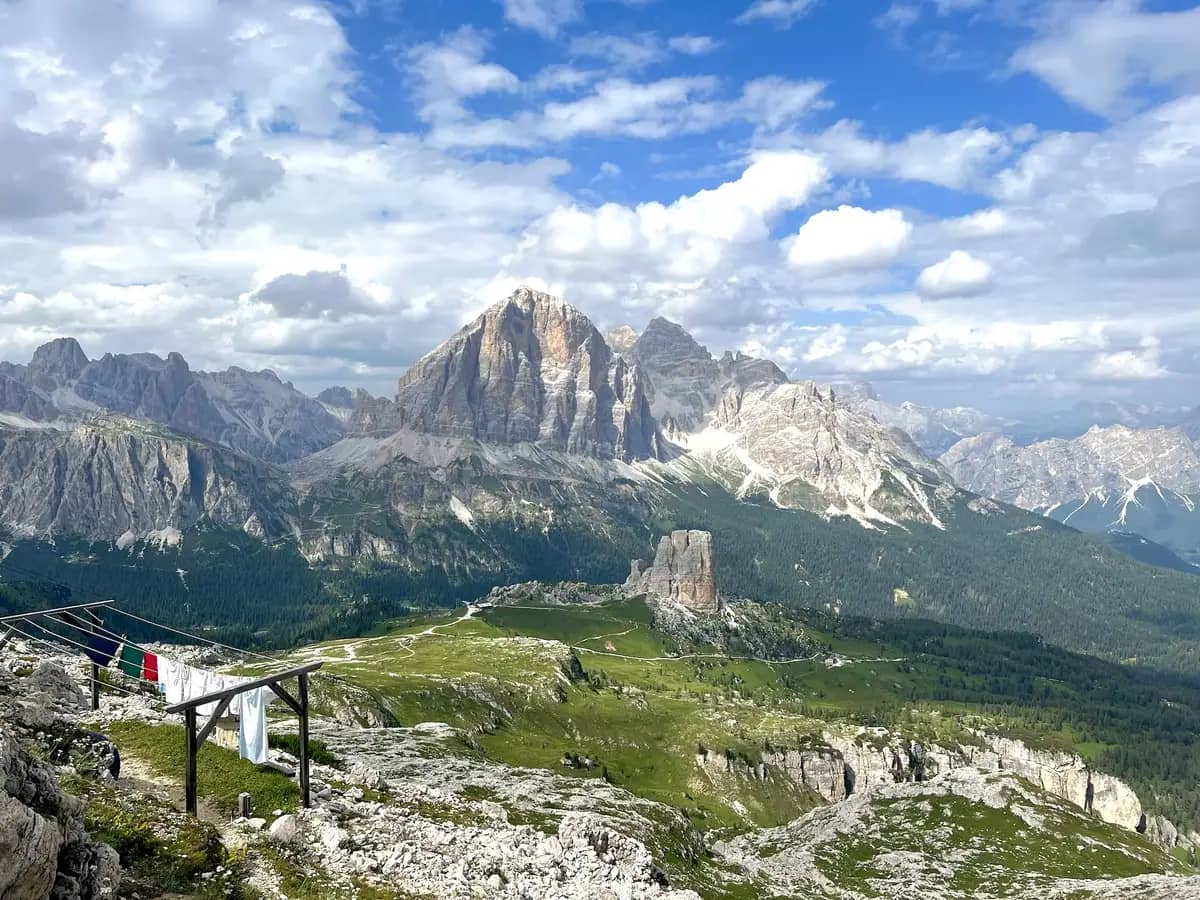
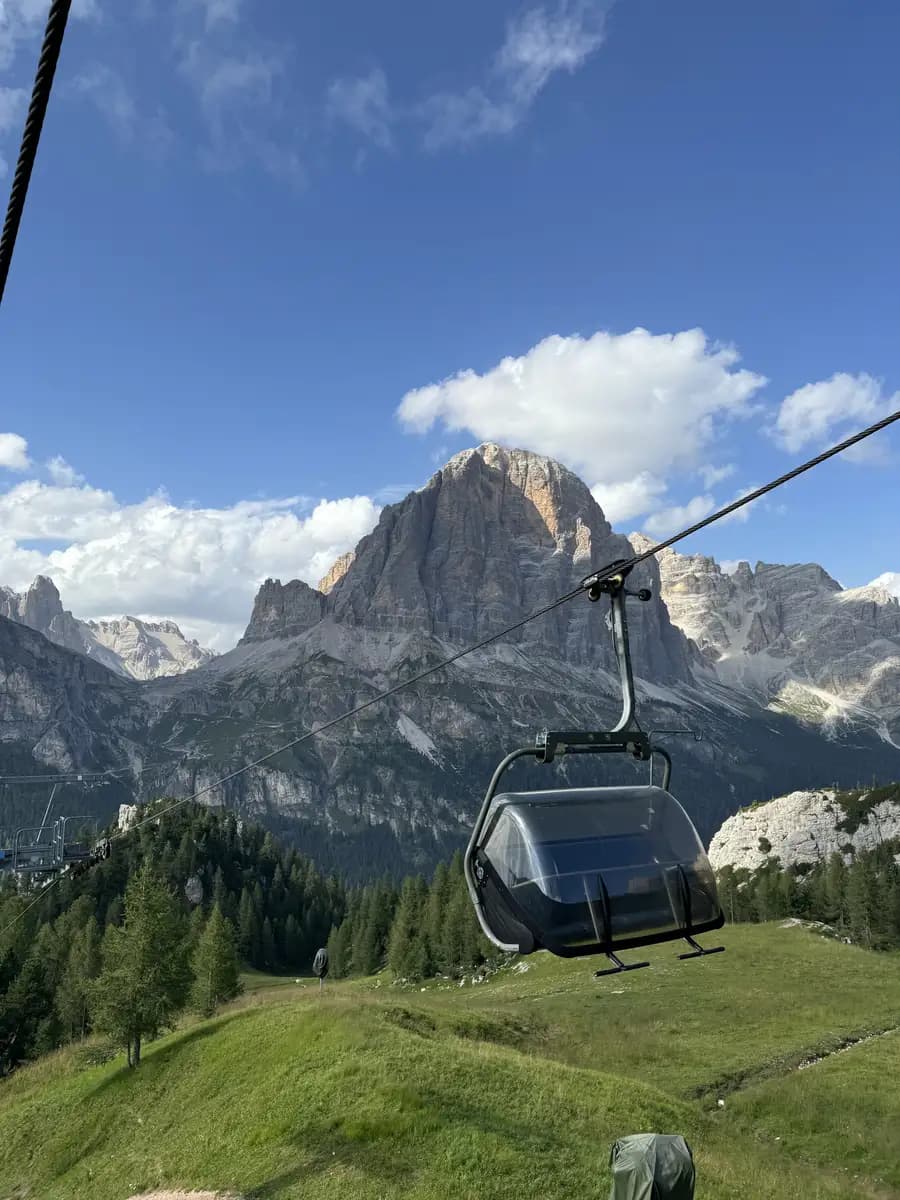
We took the cable car (the Seggiovia Cinque Torri) straight up from the car park. The lift is open and running, and the ride up is an experience in itself. As you rise, you get some of the best views I’ve ever seen, looking out towards Val Gardena, you can spot the iconic Sassolungo (Langkofel) standing tall in the distance. It’s that massive, jagged “long stone” mountain that dominates the horizon.
If I had to pick a favourite peak in the Dolomites, and believe me, the competition is stiff, it would have to be Sassolungo (Langkofel). There’s something about its sheer, vertical scale that just stops you in your tracks. Whether you’re seeing it from a distance in Val Gardena or catching a glimpse of its jagged silhouette from the top of a cable car, it’s the one mountain that never fails to make me feel small in the best possible way
The Hike: Giro delle Torri (Cinque Torri Loop)
Once you hop off the lift at Rifugio Scoiattoli, you’re right at the starting point for the Giro delle Torri. It’s a circular loop that is surprisingly easy to follow and manageable even if you aren’t an expert hiker.
- The Route: The trail winds right through the middle of the massive stone towers. It’s a loop, so you’ll end up right back where you started at the Rifugio.
- WWI History: What makes this walk really special is that it’s essentially an open-air museum. The area was a key lookout point during World War I, and the paths are steeped in history. You can walk through the restored trenches and bunkers where soldiers lived and fought.
- The Vibe: It’s a bit of a surreal feeling. One minute you’re admiring a panoramic view of the Alps, and the next you’re standing in a piece of history that puts everything into perspective.
The Push to Rifugio Nuvolau
Even with my recovering ACL, I decided to try the hike up to Rifugio Nuvolau.
- The Terrain: It’s a bit steep and the ground is quite uneven, so take your time if you’re managing an injury like I was.
- The Time: It took about 50 minutes to an hour to reach the top.
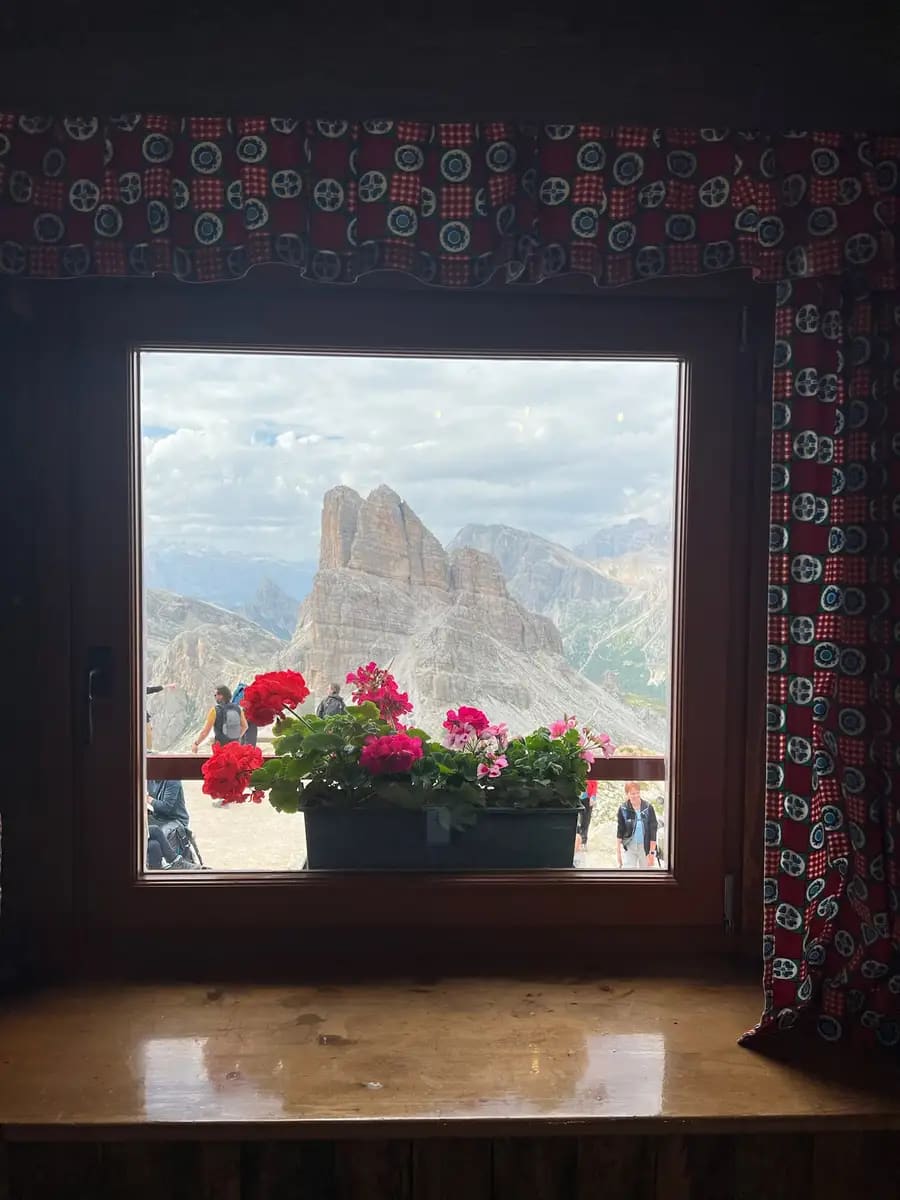
- The Reward: The restaurant at the top offers views that make every bit of effort worth it.
- The Descent: We caught one of the last lifts back down. These are open ski-lift style chairs, which means you get completely unobstructed, 360-degree views of the Dolomites as you glide down. It was the perfect, quiet end to a big day of exploring.
Day 6: Rowing Circles and Secret Views
The Reality of Rowing at Lago di Misurina
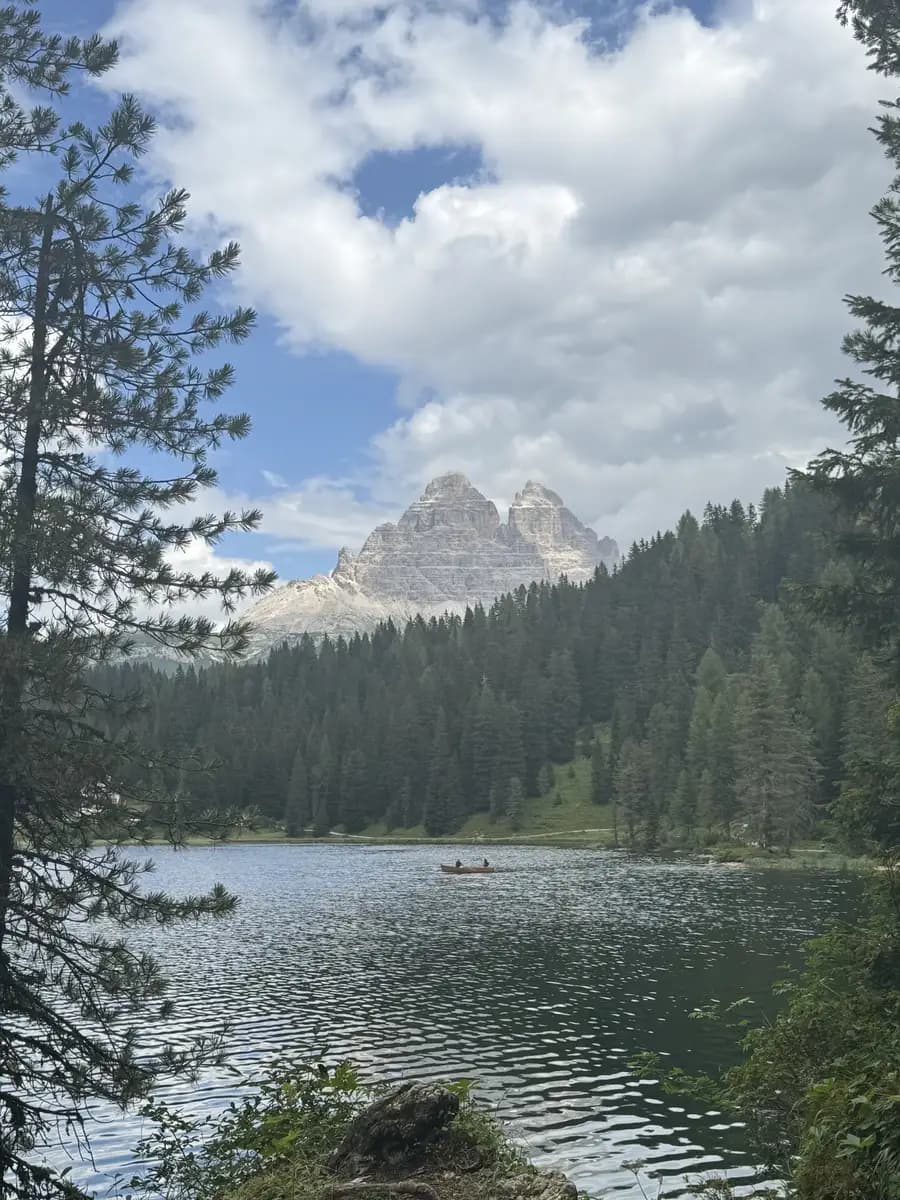
We headed to Lago di Misurina with the idea of rowing across the water. We rented a boat for 30 minutes, and let me tell you no one warns you how hard those things are to row! We spent most of our time rowing in circles and barely made it to the middle of the lake. It’s much harder than the photos make it look, but we had a good laugh about it.
Parking Tip: Parking right by the lake was a struggle. We ended up parking a little bit outside of the town and walking in, which was a nice gentle stroll.
The Picnic Tradition
After our workout on the lake, we hit the local supermarket for our usual sandwich supplies. We walked around the perimeter and found a bench with an incredible view of the mountains to watch the world go by.
The Crystal Clear Lago di Landro: The Ultimate Hidden Gem
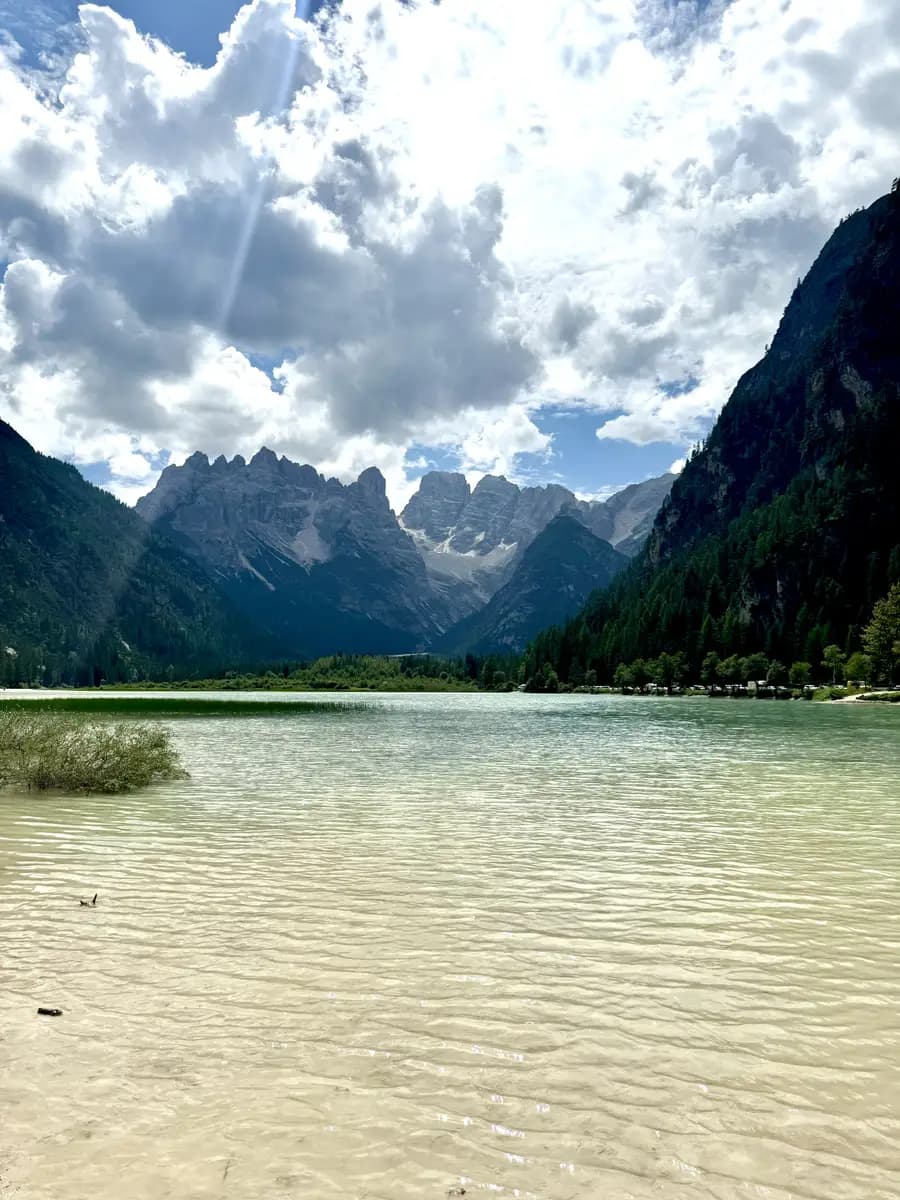
After leaving Lago di Misurina, we drove 10-minutes over to Lago di Landro (Dürrensee). Honestly, if you’re looking for the ultimate hidden gem in the Dolomites, this is it.
The lake sits right on the side of the road, meaning you can pull over, hop out of the car, and be staring at one of the most unbeatable views in the region within seconds (no hiking required). The backdrop features the massive peaks of the Cristallo Group, and on a clear day, the reflection in the turquoise water is simply staggering. We almost had the entire place to ourselves.
Pro-Tip: Bring some padding
If you plan on lounging here like we did, make sure to bring comfortable beach towels or a travel mat. The ground is very rocky and not exactly nap-friendly if you’re just lying directly on the stones. A bit of padding goes a long way, you can also get into the lake, just be careful as it is very slippy.
We drove another 20 minutes and finished the day in San Candido, a beautiful town packed with bars and restaurants, perfect for a long-awaited aperitivo outside.
Day 7: The Ultimate Recovery at QC Terme
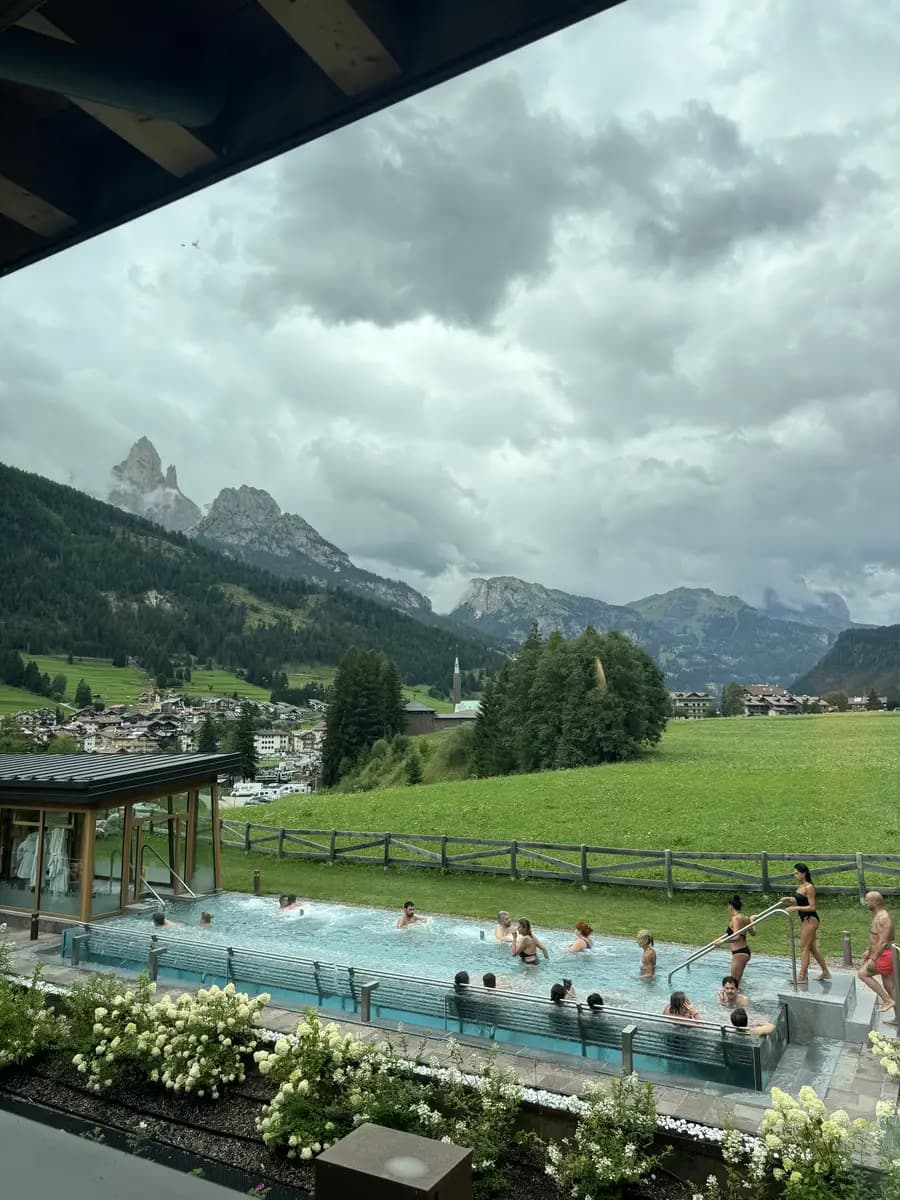
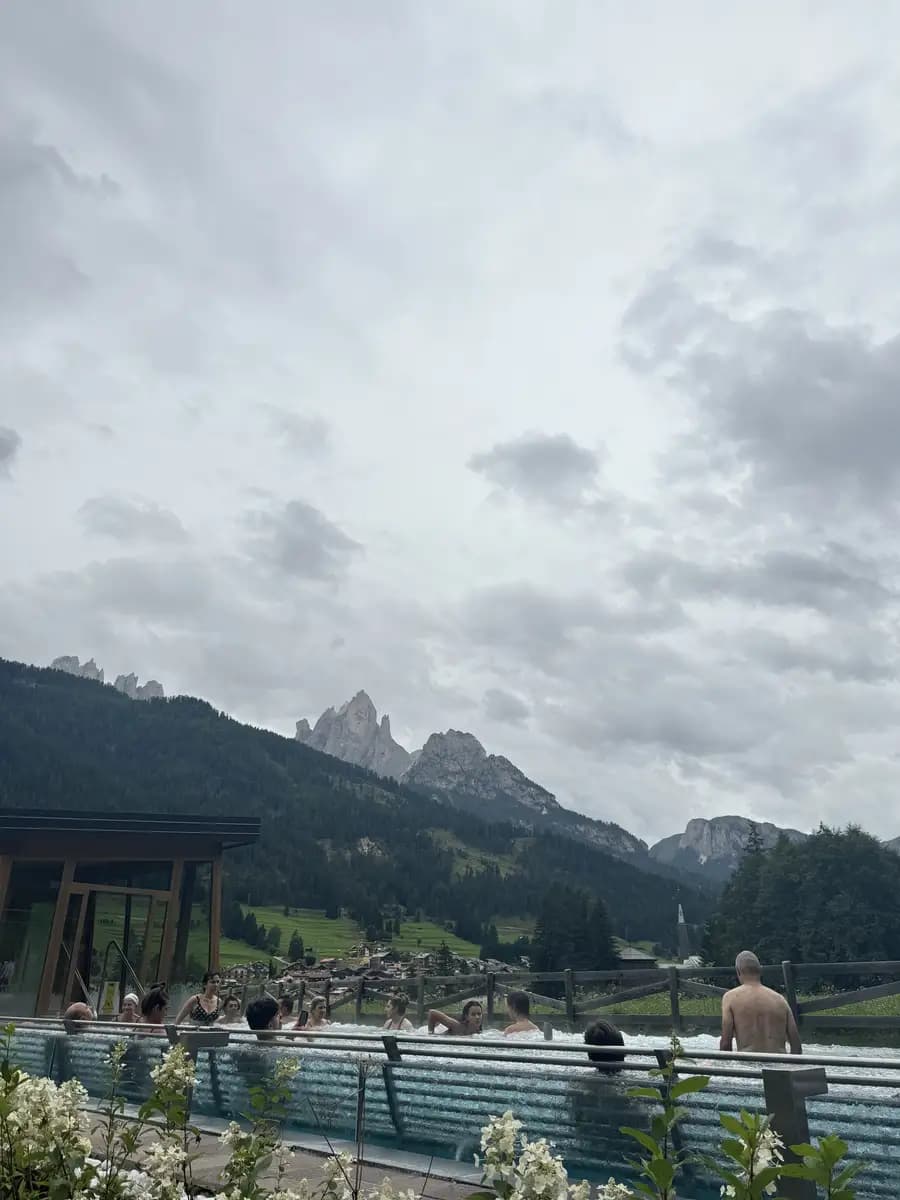
After a week of walking and managing a knee injury, we decided we needed some serious recovery. We drove just over two hours to QC Terme Dolomites.
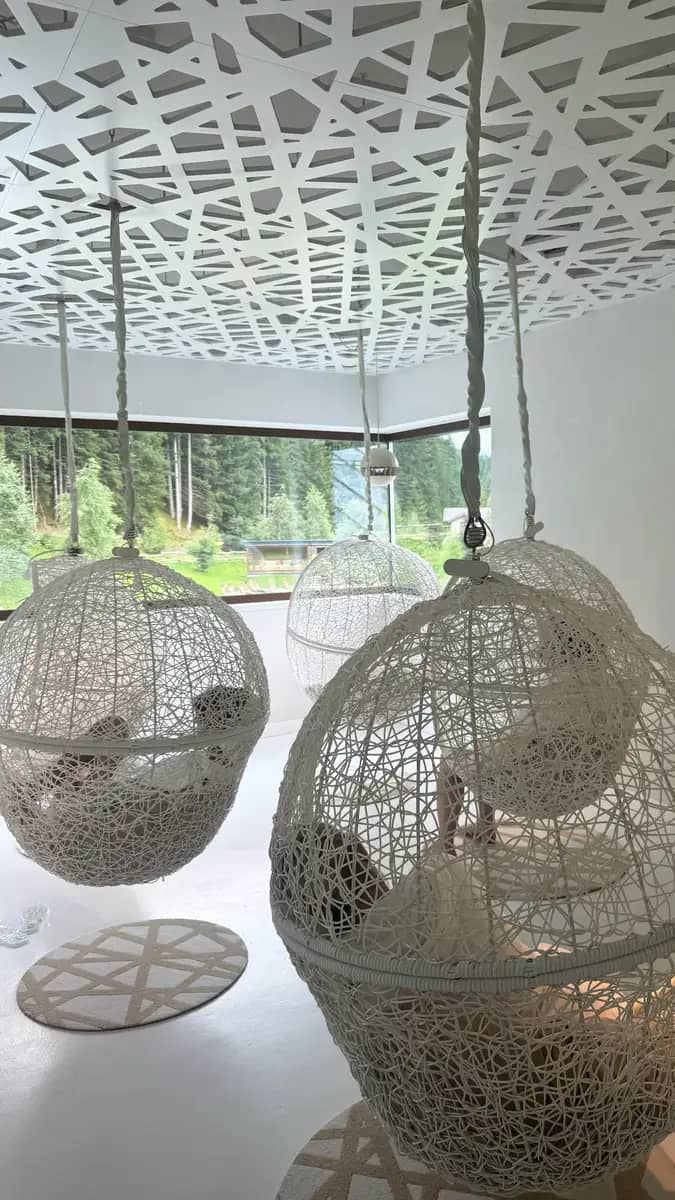
This was exactly what we needed. We spent the whole day drifting between the saunas and the heated outdoor pools. There is truly no better feeling than coming out of a hot sauna and plunging into a cold bath with the mountain air hitting your face.
Day 8: One Last Hidden Gem in Predazzo
Since the drive back to Lecco was another four and a half hours from the spa, we decided to extend the trip by one more night.
Where We Stayed: Hotel Villa Meli
We stayed in Predazzo at a place called Hotel Villa Meli. It’s a brand-new hotel with beautifully furnished rooms, and the price was incredibly good for the quality you get. Before checking in, we stopped for a lovely dinner in Moena which is another town that looks like it’s been plucked straight from a postcard.
The next morning, feeling fully refreshed from the spa and the extra night of sleep, we made the final drive back to Lecco.
Where to Stay in the Dolomites
Base yourself in our hotel [Hotel Boito] or in any accommodation around [Val Gardena] and [Cortina dʼAmpezzo]
Want a Sress-free, tailord Italian Escape?
Navigating mountain passes, toll tags, and hike timing can get overwhelming. Let me design and book your perfect custom Italy itinerary for you
Car Rental
Why rent a car?
Beat crowds: Total flexibility to reach trailheads early
Discover Hidden Gems that can’t be reached with public transport
Save Hours Travelling: Dolomites airports and top trailheads are spread far apart
Explore More Dolomites Itineraries
[5 Days in the Dolomites: The Kronplatz Base]
[6-Day Val di Funes Itinerary: The Heart of the Dolomites]